How to get the most out of your drum brakes
- Properly maintained brakes absorb 70% of the towed load
- The technology is simple, safe and easy to maintain
- Service intervals every 5,000 kilometres or once a year are worthwhile

"Drum brake technology is simple and cost-effective. And if your drum brakes are properly maintained, your next holiday is sure to be a memorable one."
Simple technology, universally welcomed
The drum brake is still the benchmark for caravans and light utility trailers. Many millions are in use worldwide every day. Some essential advice from AL-KO VT experts can help caravan newcomers, in particular, to get the most out of them over tens of thousands of on- and off-road kilometres.
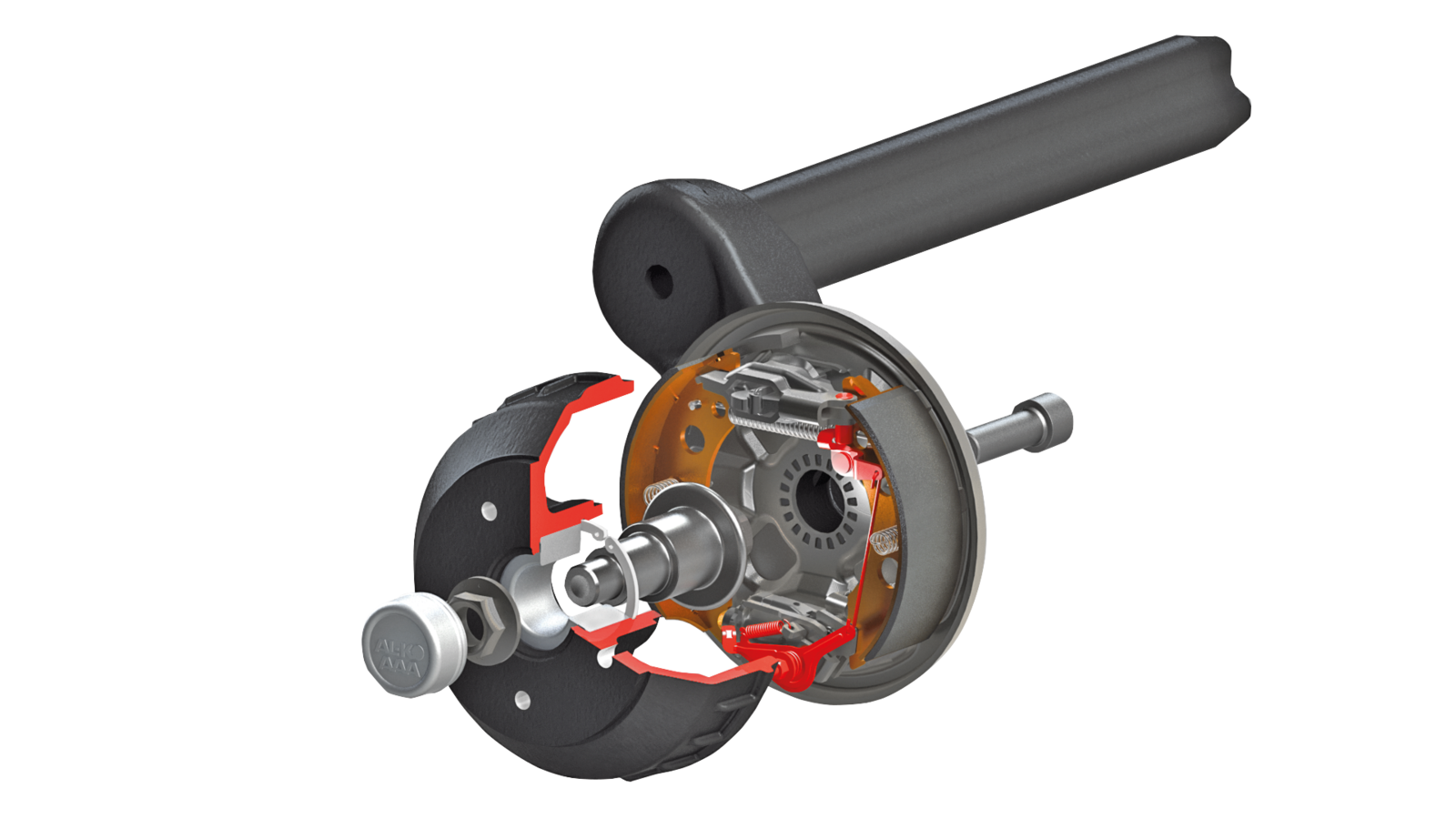
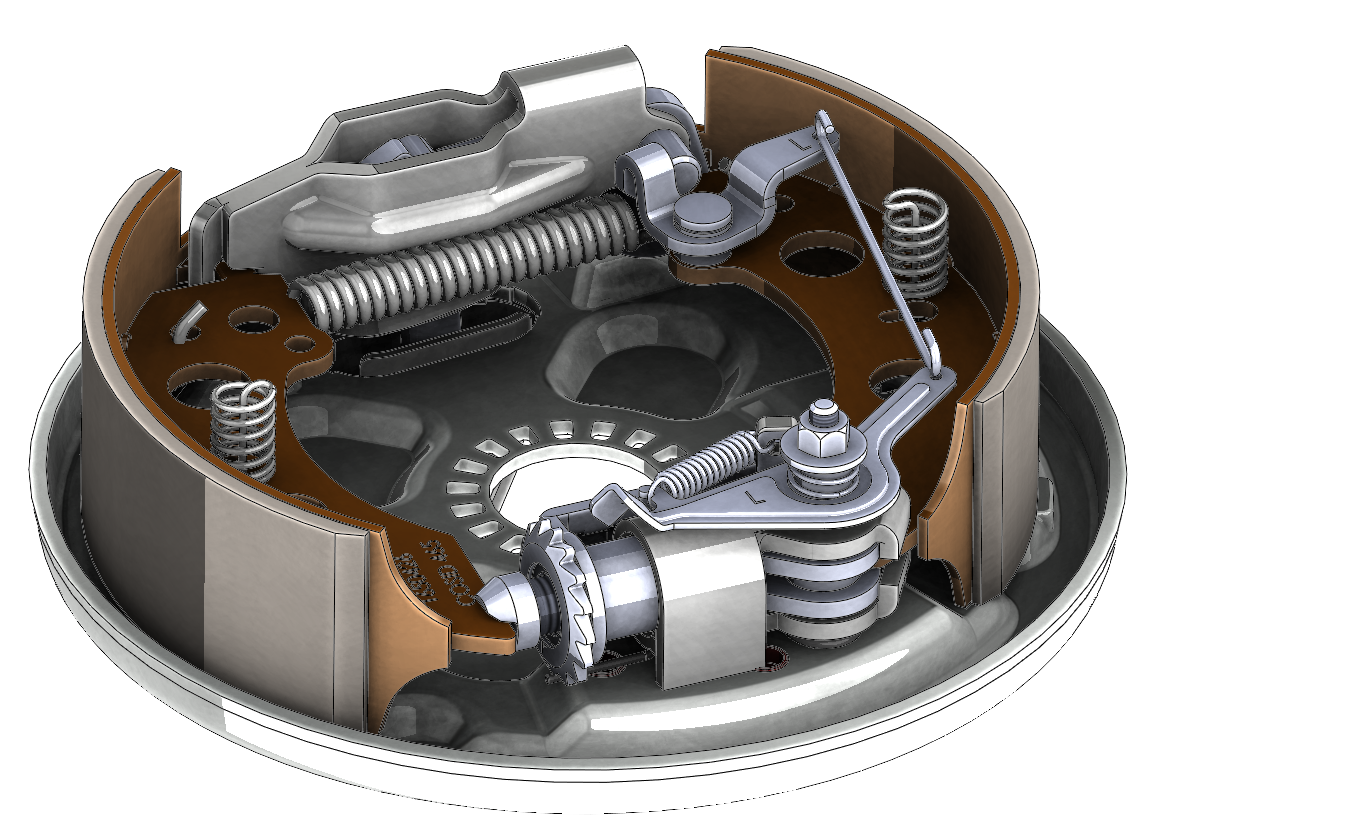
Drum brakes are built for heavy-duty jobs. Thanks to their largely enclosed housing, barely any dirt reaches the brake shoes even when travelling over rough terrain. Florian Vorreiter from the AL-KO VT Academy at the AL-KO Vehicle Technology Group explains: "Salt water, stone chipping, gravel, dust: all of this does little harm to the sturdy metal drum. The brake shoes themselves are well protected inside the drum." This also means the typical long periods of non-use with caravans are no problem for them. With properly maintained brakes, there is a clearance of just 0.5 to 1 mm between the brake lining and the drum wall – this is called the running clearance. When the driver in the towing vehicle presses the brake pedal, the trailer pushes forward and compresses the drawtube inside the overrun device. This force is transferred via a lever, linkage and Bowden cables to the drum brakes on the caravan. The brake shoes are pressed outwards, overcoming the running clearance and pressing against the inside of the drum. Vorreiter: "The lever ensures that the Bowden cables have to move three to four millimetres to take up the running clearance."
Caravan drum brakes typically provide braking force for about half the unladen weight of the entire unit and thus considerably relieve the towing vehicle's brakes. "Properly maintained AL-KO VT brakes absorb almost 70 percent of the towed load," says Vorreiter. Once the driver releases the pedal, the drawtube is pulled out of the overrun device and the Bowden cables are released. In addition, return springs move the brake shoes back to their initial position. Although drum brakes withstand tough environmental conditions, they also cope well with thousands of miles of travel. They are regarded as low-wear. "The entire technology is simple, safe and easy to maintain," says Vorreiter. "If you don't make it to the workshop before your trip, practically any vehicle repair shop in your own country or abroad will be able to help – which is a big advantage when you are far from home." Adjusting the brakes, removing build-up, replacing the linings, checking and renewing lubrication points: none of this is a challenge for workshop professionals.
Maintenance pays off and saves money
If you want to look after your caravan's drum brakes, it’s important to take the recommended service intervals seriously. The brakes should be checked by professionals every 5,000 kilometres or once a year. The most important part of standard maintenance is to clean the components, vacuum out the brake dust from the drum and dispose of it correctly before it can stick to moving parts. Moving parts need to be kept in good working order and, most importantly, the brakes must be properly adjusted. "This can all be done quickly in the workshop and will reliably prevent consequential damage," says Vorreiter. "If you skip maintenance, you may soon need to replace components rather than just clean them – which is likely to be much more expensive. High temperatures can also cause the resins in the linings to evaporate, leading to glazing. If the linings are damaged or have reached the wear limit of less than two millimetres at their thinnest point, they should be replaced in axle sets."
No need to deliberately bed in new linings
In addition to regular services at the workshop, AL-KO VT recommends a check after the first 500 kilometres, after replacing the linings, or for new vehicles. Vorreiter: "Over the first few kilometres, the lining surfaces and drum do not yet fit perfectly to one another. The friction pairing first needs to bed in." Nevertheless, drivers should avoid deliberately 'breaking in' the brakes hard on these first trips. "At the start, the friction energy is not distributed optimally across the entire lining surface. In extreme cases, some areas which make contact first during braking can overheat. Glazed patches can form on the linings. This, too, can prevent the brake from delivering its full performance." Bedding in the linings therefore means: drive smoothly, avoid harsh braking and long mountain descents if possible. If there's no alternative to a mountain pass, it's best to plan some additional cooling breaks.
Check lining thickness yourself – leave adjustment to the experts
Caravan owners can check the linings themselves. On the inside of the brake drum there are two plastic dust caps. One of them gives a view of one of the brake linings. It should be at least two millimetres thick. If it's thinner, you should book into your trusted workshop soon. Vorreiter: "If you keep to regular servicing appointments, this shouldn't be something to worry about. Workshop professionals will have enough experience to decide whether the existing linings will safely last through the next longer trip or if they need replacing in advance." Behind the second cap, the running clearance can be set. Of the many do-it-yourself recommendations for adjusting the running clearance with a screwdriver and 'feeling', brake expert Vorreiter strongly advises against it: "A screwdriver can be used to turn the toothed adjuster until the wheel locks, but whether it takes four, six or maybe twelve clicks to achieve the correct distance between the lining and the drum wall should be measured." Professionals can immediately see during inspection if the linings are damaged or worn unevenly. "That, too, must be checked if the brakes are to be set properly," says Vorreiter.
Noise is all part of the experience
With new drum brakes, you may hear a slight rubbing noise when the wheel spins freely. Noise during braking is completely normal. Sounds can range from scratching and rasping to squealing at various frequencies. Vorreiter: "The metal drum and the backplate may resonate and amplify the internal sounds. In particular, if it has been standing in a damp environment, there can be noise on the first brake after a long pause." However, persistent squealing or pronounced rubbing noises may be more than just an irritation. Vorreiter: "They can be a sign that it's time for a workshop visit."

Operating temperature and anticipating the road ahead
Drum brakes operate best at a brake temperature of around 100 degrees Celsius. Vorreiter: "It's normal for them to reach 200 to 300 degrees on mountain routes and after several consecutive braking manoeuvres. Anything over 400 degrees is too much." Serious dragging – caused by a broken return spring, heavy build-up due to missed maintenance, or glazed or damaged linings – can lead to overheating. Continuous light braking on mountain descents can have a similar effect. "Dragging like this heats up the brakes," says Vorreiter. "During extended use, the airflow and heat radiation are no longer enough to dissipate the heat quickly." At extreme temperatures, linings can glaze or even crack. Vorreiter: "In extreme cases, braking performance may diminish. At very high temperatures, the grease in the wheel bearing can also lose its effectiveness."
Drive skillfully, maintain wisely
If you are curious as to whether one of your brakes overheated during your last trip, it is hard to judge afterwards. Signs may be dark spots on the rim, visibly overheated (white-hot) drums and backplates, or the small plastic caps on the rear of the backplate melting at around 300 degrees. Vorreiter: "The quoted temperatures of 300 or 400 degrees are very theoretical values. In practice, hardly anyone has a suitable measuring device with them, especially since it is really the temperature inside the brake that is important, and how long it stays there." To reliably avoid overheating, you should brake less frequently but more firmly on downhill stretches. Depending on the road, it can make sense to accelerate occasionally to stretch out the towing combination again. This prevents so-called 'drag journeys', i.e. constant slight braking and overheating of the linings. In any case, it is important to drive with foresight and adjust speed accordingly.
Drivers should also bear in mind that many modern towing vehicles automatically activate engine braking. "This means the vehicle slows down even if you are not pressing the brake pedal. But every deceleration by the towing vehicle means another round of braking for the trailer." This can place additional stress on the trailer brakes. On long downhill drives it can therefore be a good idea to stop for a cooling-off break – and treating yourself to a coffee is always worthwhile. Before you set off on your next big trip, be sure to book regular servicing for your caravan. Vorreiter: "Drum brake technology is simple and inexpensive. With properly maintained drum brakes, your next holiday is sure to be a memorable one."
Brake safely, travel relaxed!
The brakes are at the heart of caravan safety. Our Service Manager, Florian Vorreiter, joins Dennis from Gogo4Camper in two videos to highlight the key points:
- Maintenance tips for reliable brakes
- Correct braking technique in challenging driving situations
- More safety and control on every journey
