Hydraulics: new ways of handling pressure
Safim and Fluid-Press, two established names in the hydraulics market, form the core of the Hydraulic business segment at AL-KO VT. How do innovations help to expand market presence and business? Valeriomarco Montanari, R&D Manager for the hydraulics business at Safim, provides insights.

Key Facts at a Glance
- Comprehensive Hydraulic Solutions: With the development expertise of Safim and Fluid-Press – supported by CERMA – AL-KO VT offers hydraulic solutions for all braking requirements of mobile working machines.
- Bespoke development and platform strategy: By intelligently combining modular standard products with single components optimised specifically for each vehicle function, experts ensure the required level of efficiency and reliability.
- Digital hydraulics: The digitalisation of hydraulic systems provides the foundation for an entirely new level of precision and functionality: a development boost for the automation of this vehicle class.
One Principle, Many Applications
Effortlessly manoeuvre cranes and tractors
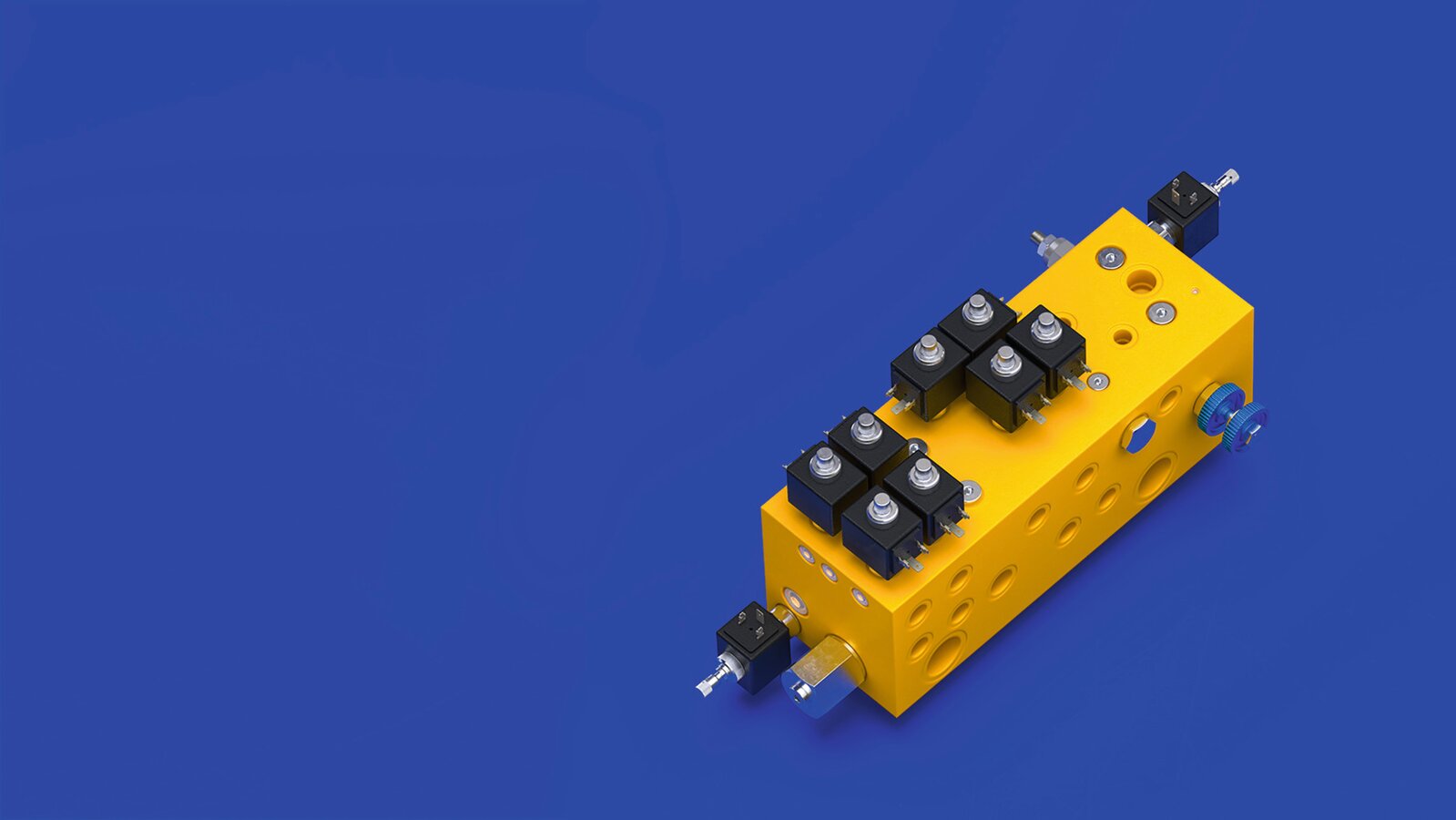
Safim builds hydraulic brake systems for off-highway vehicles. Fluid-Press manufactures hydraulic valves and manifold blocks. The fundamental principle is always the same: a pump pushes hydraulic fluid from a reservoir into the hydraulic circuit, valves control pressure distribution and flow within the piping system, and in the cylinder, the force of the fluid is converted into the movement of a piston or the rotation of a hydraulic motor. “The difference, in the case of Fluid-Press and Safim, is primarily in the applications of this technical process,” says Valeriomarco Montanari, R&D Manager at Safim.
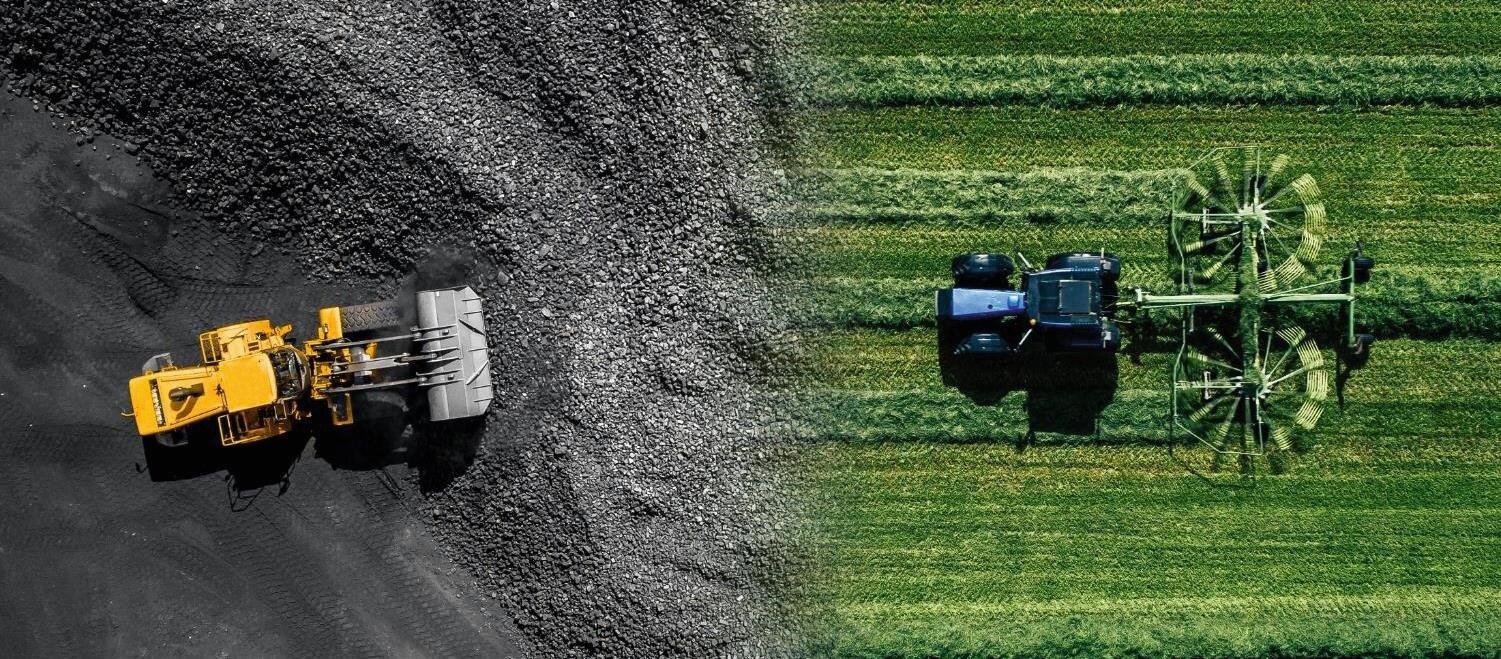
“While Fluid-Press, with their hydraulic valves and integrated hydraulic circuits, can control many functions of tractors, combine harvesters, standard and specialist cranes, lifting platforms, aircraft handling vehicles, crawlers, excavators and so on, Safim specialises in the hydraulic brake systems of these vehicles and mobile machines.” Not only are the loads that these pieces of equipment can effortlessly move typically measured in tonnes – their own unladen weights can also reach that of a heavy goods lorry. As a result, controls and brakes must be exceptionally reliable and precise in order to avoid accidents or errors.
Customised Optimisation
Developed in Close Coordination
Equipped with an entire range of valves for different performance classes, the engineers at Fluid-Press create tailor-made vehicle movement solutions. New functions can also be competently designed using this set of components. “Close collaboration with the customer is central in this process,” says Montanari. “After all, the final solution must be both efficient and uncompromisingly reliable.” This is especially true of brake solutions from Safim. The development and approval of new hydraulic brake controls require many coordination rounds with each customer, often involving weekly meetings of the respective experts.
Reliability as the Highest Priority
Develop, Build and Test Specifically
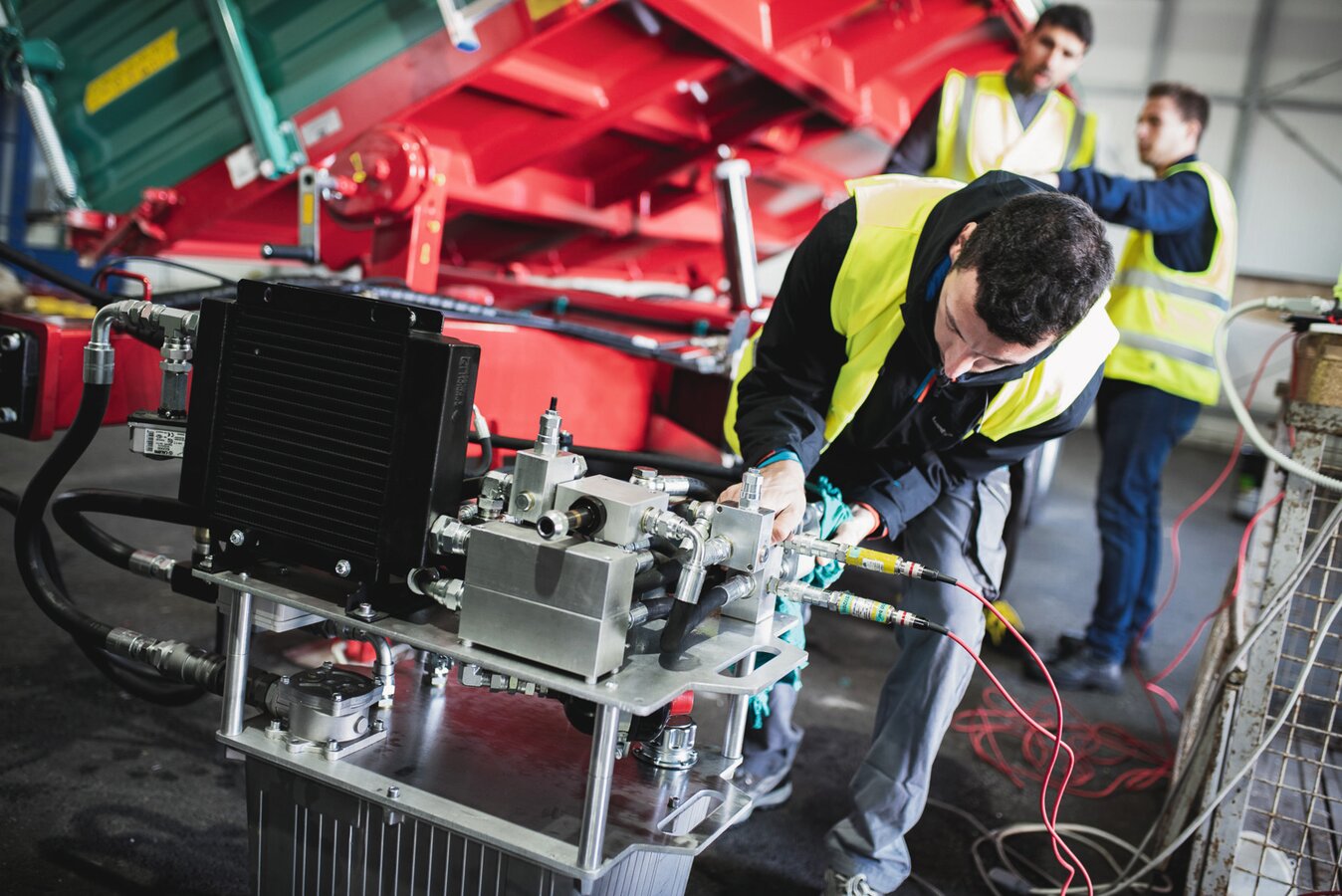
Development is characterised by series of tests. Millions of test cycles are standard for such systems. Montanari: “We work practically side by side with our customers. We have to understand exactly which challenges the vehicle should be able to withstand.” Only this way can the brake system achieve maximum performance. To achieve the best possible balance between performance and efficiency, for example, Safim’s master valves are developed completely according to the specific application. The hydraulic-integrated system design from Fluid-Press also follows the customer’s specific requirements in detail. These compact valve packages optimise installation and system maintenance times and also reduce the number of connections to a minimum.
Implementing Legal Requirements with Foresight
Turning Regulations into Innovation Drivers
Sometimes, the European Union plays a decisive role when it comes to introducing innovations. As part of efforts to minimise road accidents and increase overall safety, the EU decided in 2013/2015 that agricultural trailers must be equipped with a dual-line braking system. Montanari: “There were previously different national regulations and technical solutions across Europe.” However, as of 2025, the use of single-line systems on tractors is to be avoided across the EU. “Accordingly, we offer dual-line systems that meet EU requirements for every type of vehicle. For countries where single-line systems are still permitted, we also provide those solutions.”
Shaping the Future
Digitalising Hydraulics
For the entire hydraulic segment at AL-KO VT, safety and efficiency are the main innovation drivers. “At the same time, we recognise a clear trend towards more and more comprehensive automatic functions in agricultural machinery and construction equipment, up to fully automated machines,” says Montanari. For this reason, at Bauma 2022 Safim already presented intelligent functional systems for autonomous braking under the theme “Shaping the future of Braking”.
Full brake-by-wire systems offer, among other things, downhill assistance, anti-slip control and, last but not least, solutions for collision avoidance. “From our point of view, the future can come,” says Montanari, with more than a hint of pride. “Typically, development cycles in hydraulics are very long, but as we move from pure hydraulics to hybrid electro-hydraulics, we are witnessing a dramatic acceleration of progress – and we are right at the forefront.”
The Next Level of Automation
New Functions, Realised More Easily
Digitalisation not only enables new functions which make working increasingly safe, it also takes precision and operating simplicity to the next level. Montanari: “Digital hydraulics open up potential for ever higher levels of automation, speeding up work processes with increasingly simple operations and ensuring ever more efficient systems.” Last but not least, the new possibilities also help to ease the shortage of skilled workers. All these are ingredients for a significant development surge in the hydraulics market.