How to load your recreational vehicle correctly
Safety for you and other road users – that's what proper loading is all about. Of course, driving comfort, fuel consumption and technical limits also play a part, but ultimately these are secondary to the main issue: driving safety.

The essentials at a glance
- Weight and weight distribution are the key factors for safe travel
- Tips for correct loading and reducing weight
- Key terms explained briefly – from axle load to permissible gross weight
Why proper loading is important
The decisive factors for correct loading are weight and weight distribution. Both too much and too little weight can negatively affect driving behaviour. If both factors are aligned correctly, you have got it right. But how do you do this and what can happen if you don't?
Important factors for panel vans and motorhomes
Small and large recreational vehicles usually offer a lot of storage space at the rear – whether that is under the beds in the panel van or in the rear garage of the motorhome. At the same time, the vehicle’s payload is limited, especially for models with a permissible gross weight of up to 3.5 tonnes. This combination of possible overloading and weight concentration at the rear creates a potential risk if care is not taken when loading.
Special considerations for caravans
There is another factor to consider with caravans: the risk of snaking or swaying during travel, potentially causing the caravan to tip over. If the trailer is overloaded, underloaded or incorrectly loaded, this can lead to driving problems even at moderate speeds. In addition to load distribution, you should also pay attention to a moderate speed, the risk of crosswinds on bridges or in gusty conditions, and appropriate speed for bends and winding stretches of road. Technical equipment such as a stabiliser coupling helps to support comfortable and safe driving. Should you ever find yourself in an emergency situation: reduce your speed immediately and avoid doing an emergency stop!

Loading your vehicle correctly: our top 7 tips
Loading correctly means not overloading, not underloading, and choosing a sensible weight distribution:
- Observe the specified weight limits.
- Store heavy items of cargo in your recreational vehicle as low as possible and around the axles.
- Store moderately heavy items such as shoes, kitchen appliances or food supplies in low storage compartments or base cupboards.
- Transport lightweight items such as clothing and lightweight camping tableware in upper compartments.
- Secure the load so that nothing can fly around the vehicle during braking – meaning, fit loose objects in storage lockers and/or secure with retaining straps.
- Any pets travelling with you must be secured during the journey, just like vehicle occupants. Dogs and cats are considered cargo by law in vehicles. Suitable options include transport crates, dog boxes (with a secure footing), or using seatbelts and harnesses.
- For peace of mind, weigh your recreational vehicle once it is fully loaded.
Weighing your recreational vehicle: here's how
If you want to weigh your camper, there are various options. If you do not have your own scales, you can check with external providers such as the ADAC, TÜV, haulage companies or waste disposal sites to ask if you are permitted to use their weighbridge.
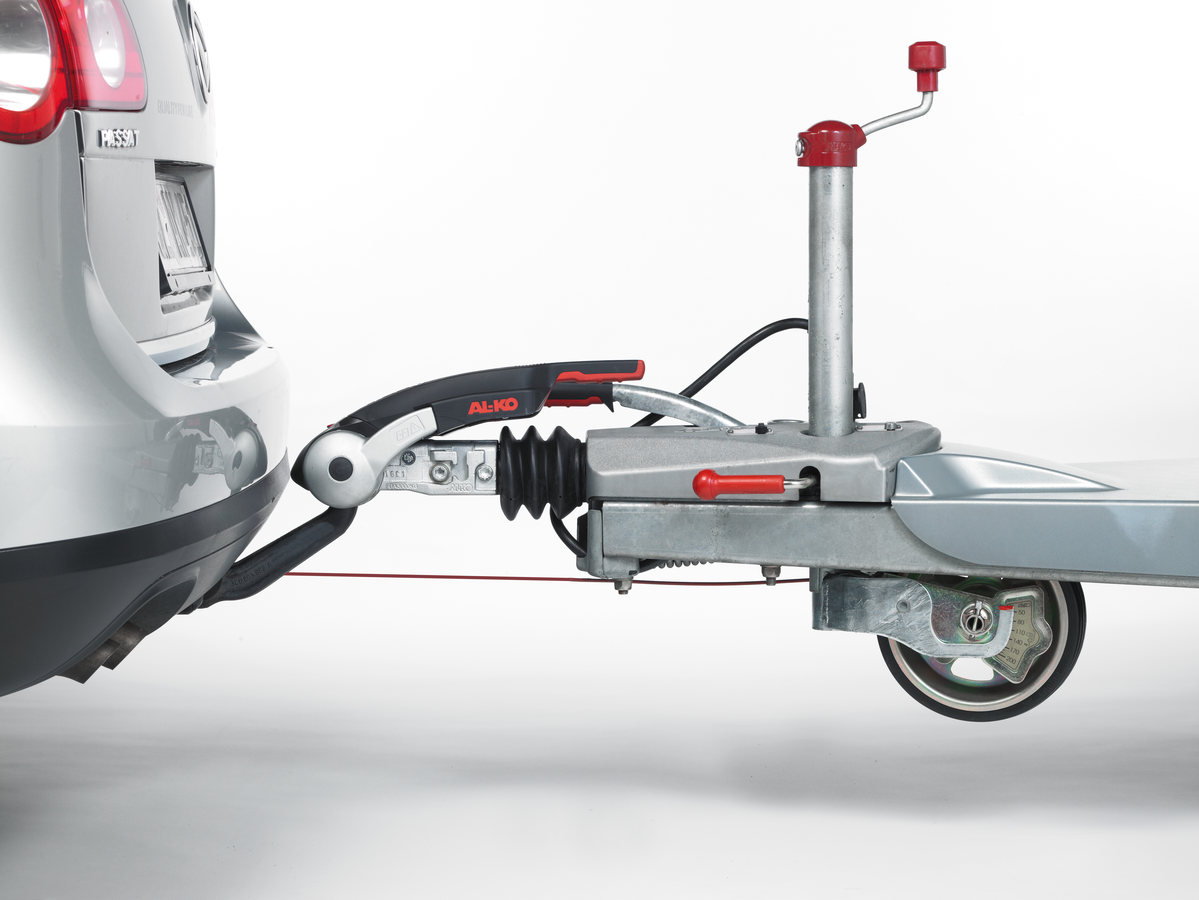
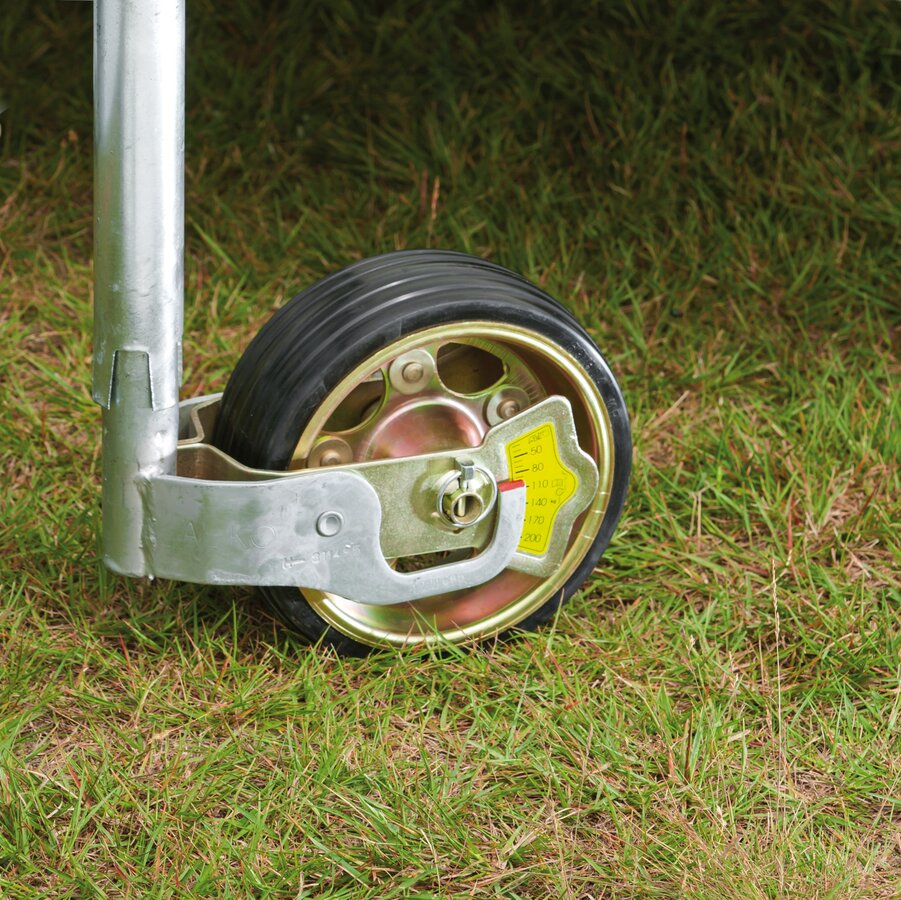
There are also small, portable scales available from specialist camping retailers, which you can place under the wheels or use to check the jockey wheel load. For caravan owners, the AL-KO VT jockey wheel with load indicator offers even more convenience, as it has an integrated weighing function. It is available from our webshop.

What to do if you are overloaded?
How to reduce weight
However you check the weight of your recreational vehicle – if it turns out that the permissible gross weight is exceeded, there is only one solution: reduce the load. Otherwise, you might have to dispose of your equipment in containers provided on site during checks: If you are overloaded, you may be prohibited from continuing your journey.
Effective ways to reduce weight include:
- Do not drive with a full water tank – drain both fresh and waste water and refill only when on site.
- Use aluminium gas bottles – they are more than half the empty weight of steel bottles.
- Pack crockery and kitchen equipment made from lightweight materials.
- Think carefully about clothing and shoes and do not pack too many spares.
- Avoid luxury items where possible, such as kitchen appliances, extra camping furniture, heavy barbecues, lots of books.
- Cosmetics such as shower gel, shampoo, body lotion & co. can also add significant weight.
Penalties for incorrect load securing and overloading
The German Road Traffic Regulations (StVO) provide for fines as penalties for overloading, as well as penalty points in the Flensburg register. The measures are graded according to the degree by which the permissible weight is exceeded. In Germany, the tolerance is 2% for vehicles over 7.5 tonnes and 5% for vehicles up to 7.5 tonnes. Other countries may apply stricter rules. You can find more details in our article Fines for overloading.
You may also be fined for incorrectly secured loads: this may involve insufficient securing of cargo against falling, posing a danger, or causing property damage. Fines for these offences range from 35 euros up to 75 euros plus a penalty point.
Axle load, gross weight, payload & co.
We explain the key terms relating to correct loading and safe driving – including information on where to find the relevant data in the German vehicle documents.
Unladen weight
- Listed in the vehicle registration certificate part 1 under point G
The unladen weight of a recreational vehicle states the mass of the motorhome or caravan in road-ready condition. This includes additional equipment fitted by the manufacturer, a fuel tank 90% full, a filled gas bottle and full fresh-water and toilet flush tanks. The definition should be considered critically, as what manufacturers count towards this figure can vary significantly. Some also include a driver weight of 75 kg. Therefore: your best option is to weigh the vehicle yourself and use this as the starting point for calculating your payload.
Permissible gross weight (GVW)
- Listed in the vehicle registration certificate part 1 under point F.1
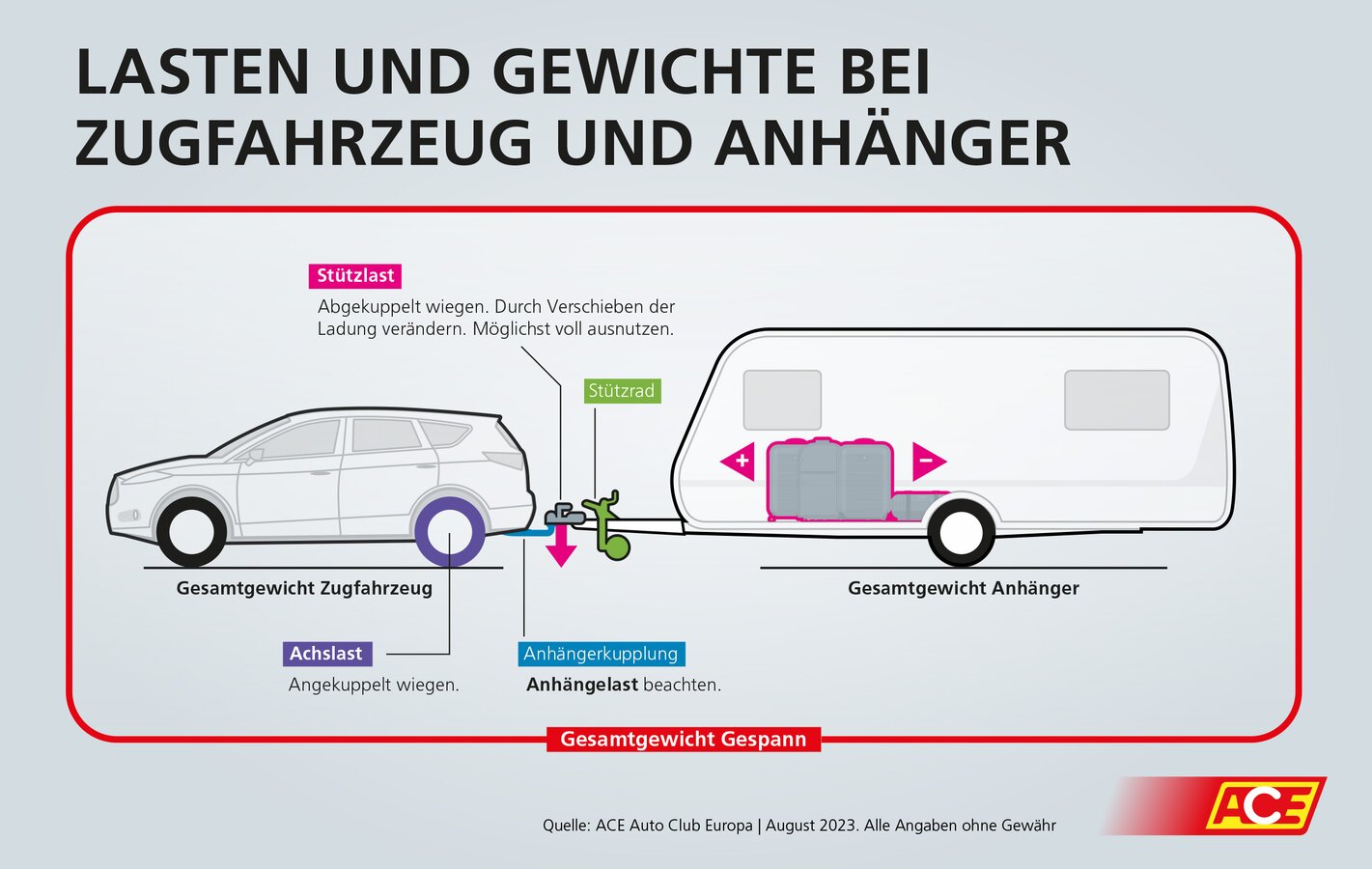
The permissible gross weight for a panel van, motorhome or caravan is also called the permissible total mass. It is the maximum weight permitted, including all items and equipment, for use on public roads. The total weight of a vehicle combination is calculated as follows: Total gross weight towing vehicle + total gross weight caravan = total gross weight of the combination.
Payload and uprating
Payload is the difference between the permissible gross weight of the recreational vehicle and its unladen weight.
- Example: Payload = 3,500 kg (GVW) - 3,000 kg (unladen weight) = 500 kg
If your permitted payload is not sufficient for your caravan, it is worth considering uprating. Uprating your caravan increases the permissible gross weight, allowing you to carry more equipment or install extra features. Everything you need to know about uprating, including a checklist for your initial enquiry, can be found on our website.
Axle load
- Listed in vehicle registration certificate part 1 under figure 8
Axle load specifies how much weight is resting on the axle/axles and being transferred to the road surface. This information applies equally to panel vans, motorhomes, caravans and towing vehicles.
Tyre load index
- Can be found on the tyre sidewall (plus information on tyre size, width, rim diameter, speed rating)
The load index (LI, also: load capacity) indicates a tyre’s maximum load rating. Each LI value is assigned a specific maximum load at an inflation pressure of 2.5 bar. For safe driving, tyre capacity must not be exceeded. It is also advisable to monitor tyre age.
- Example: The tyre marking is: 225/65 R16 91 CP 109 Q – in this example the 109 indicates your tyre's load index. This means the tyre can carry up to 1,030 kg. Tables to decode the load index can be found online.
Jockey wheel load (noseweight)
- Listed in vehicle registration certificate part 1 under point 13
This figure applies to the towing vehicle of a rig and describes the weight exerted by the caravan’s drawbar on the towball of the vehicle’s towbar. It can be measured using a jockey wheel scale or an integrated scale in the jockey wheel. It can also be calculated as follows:
- Noseweight = (Maximum permissible noseweight towing vehicle x drawbar length) / distance from axle centre to jockey wheel centre
Towing capacity
- Listed in vehicle registration certificate part 1 under point O
Towing capacity (also called towing load) applies to the towing vehicle and specifies the maximum weight it may pull. This figure depends on the vehicle model and the towing device and can range between 1,500 kilograms and up to 4,500 kilograms for large off-road vehicles.

Once registered, you will receive exclusive information about products, news, special offers and more direct to your email inbox.