How to get maximum performance from drum brakes
- Well-maintained brakes absorb 70% of the towed load
- The technology is simple, safe and low-maintenance
- Maintenance intervals every 5,000 kilometres or once a year are recommended

“The technology of drum brakes is simple and affordable. And with well-maintained drum brakes, your next holiday will definitely be an experience.”
Simple technology, welcome everywhere
The drum brake is still the benchmark for caravans and light utility trailers. Millions are in use worldwide every day. Some fundamental information from AL-KO VT experts helps especially caravan newcomers get the most out of them over tens of thousands of kilometres, both on- and off-road.
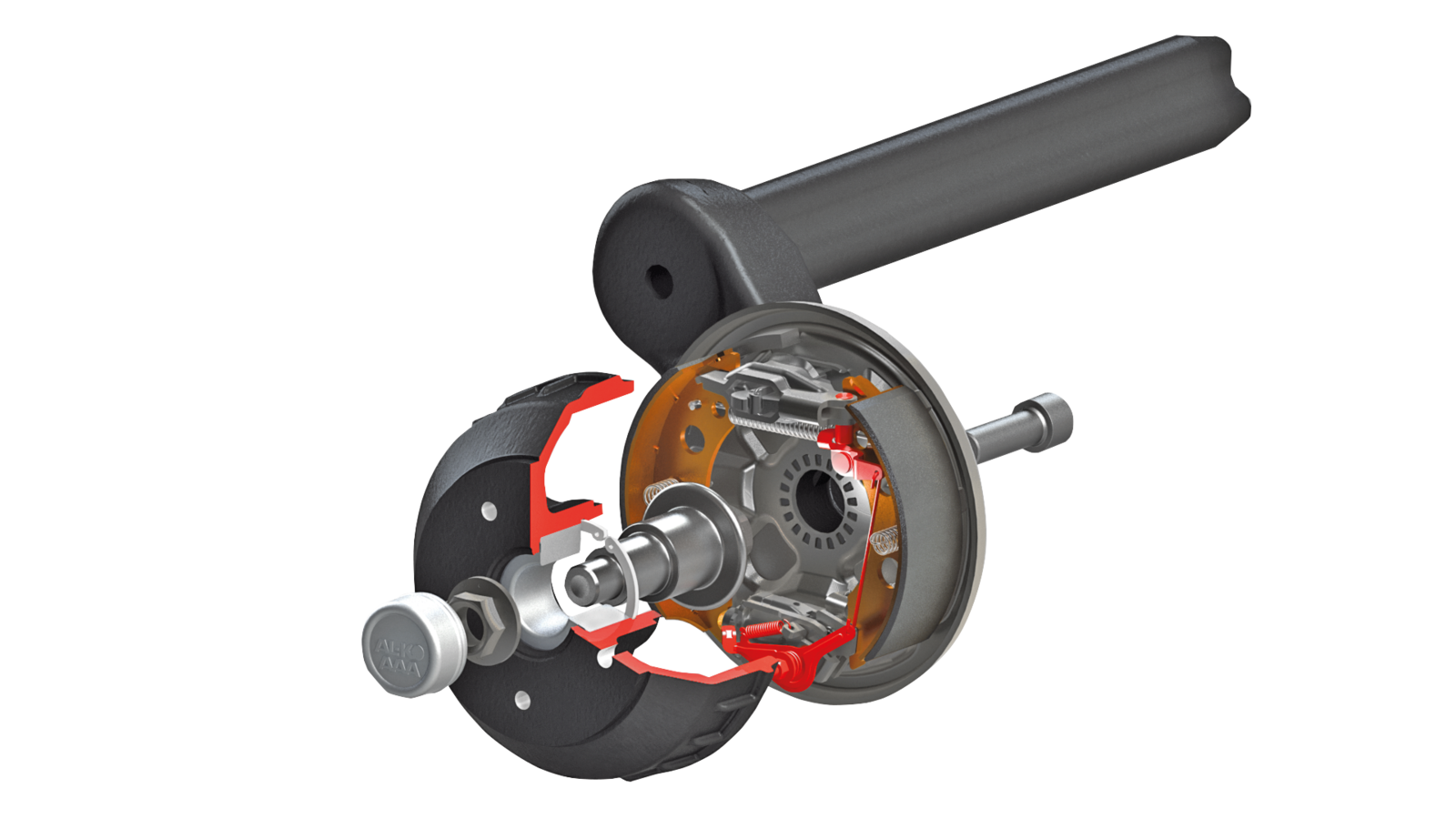
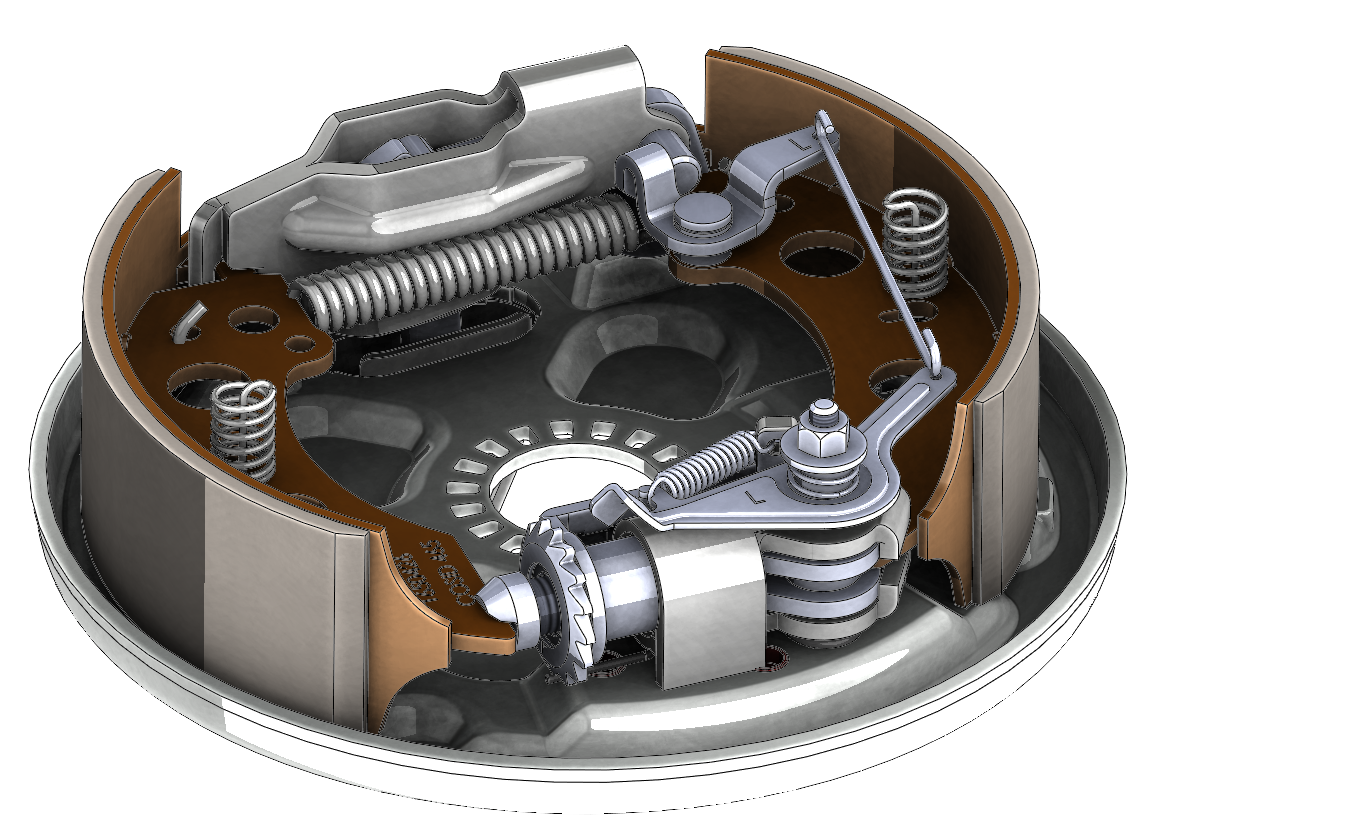
Drum brakes are built to handle rough conditions. Thanks to their largely enclosed housing, virtually no dirt gets onto the brake shoes, even in challenging terrain. Florian Vorreiter from the AL-KO VT Academy at the AL-KO Vehicle Technology Group explains: “Salt water, stone chips, gravel, dust: all this hardly affects the robust metal drum. The brake shoes themselves are well protected inside the drum.” This is also why the long idle periods typical of caravans don't cause any issues. With properly maintained brakes, there is a clearance of just 0.5 to 1 mm between the brake lining and the drum wall, known as the clearance. When the driver applies the brake in the towing vehicle, the caravan pushes forward and compresses the drawbar located in the overrun device. This force is transmitted by a lever, linkage and Bowden cables to the drum brakes of the caravan. The brake shoes are pressed outwards, overcoming the clearance and rubbing against the inside of the drum. Vorreiter: “The lever ensures that the Bowden cables need to be moved three to four millimetres to overcome the actual clearance.”
Caravan drum brakes typically brake around half the unladen weight of the towed unit and considerably relieve the brakes of the towing vehicle. “Well-maintained AL-KO VT brakes take up to 70 per cent of the towed load,” says Vorreiter. When the driver releases the brake pedal, the drawbar is pulled out of the overrun device, relieving the Bowden cables. In addition, return springs bring the brake shoes back to their starting position. As robust as drum brakes are against adverse environmental conditions, they also respond reliably over many thousands of kilometres. They’re considered low-maintenance. “The entire technology is simple, safe and easy to maintain,” says Vorreiter. “If you don't make it to the workshop before your journey, virtually any professional car workshop at home or abroad can help – a big advantage when you're far from home.” Adjusting the brakes, removing abrasion, changing linings, checking and refreshing lubrication points: these pose little challenge for experienced workshop professionals.
Maintain more often and save money
If you want to treat your caravan’s drum brakes well, you should take the prescribed maintenance intervals seriously. Every 5,000 kilometres or once a year, a qualified professional should inspect the brakes. The most important part of routine maintenance is to clean the components, carefully vacuum the brake dust from the drum and dispose of it properly before it clogs any moving parts. Moving parts also need to be kept moving and, above all, the brakes set correctly. “All of this is quickly done in the workshop and reliably prevents consequential damage,” says Vorreiter. “If you skip maintenance, what would have been a simple clean can easily escalate into needing to replace components – which is much more expensive. Excessively high temperatures can cause the resins in the lining to outgas and the linings to become glazed. If the linings are damaged or have less than two millimetres thickness left at their thinnest point – the wear limit – they should be replaced on both sides of the axle.”
No need to bed in new linings intensively
Alongside regular scheduled workshop appointments, AL-KO VT also prescribes a check after the first 500 kilometres, after changing the brake linings or for new vehicles. Vorreiter: “During the first few kilometres, the lining surfaces and the drum don't fit together 100 per cent. The friction pair still needs to bed in.” That's why drivers should avoid intentionally ‘bedding in’ the brakes harshly during these initial journeys. “At first, the friction energy isn't yet distributed optimally over the entire lining surface. In the worst case, some areas that grip first when braking can overheat. Glazed patches could form on the linings, and this in turn can stop the brakes from delivering their full performance.” Bedding in linings means: drive with anticipation, avoid heavy braking and long mountain passes where possible. If a mountain pass cannot be avoided, then it’s best to schedule cooling breaks.
Check lining thickness yourself, adjustment should be left to the workshop
Vehicle owners can inspect the linings themselves. Inside the brake drum are two plastic dust caps. One of these shows a view of one of the brake linings. It should be at least two millimetres thick. If it’s thinner, you should arrange a timely appointment with your trusted workshop. Vorreiter: “Anyone who sticks to the regular service intervals needn’t worry. The professionals have enough experience to judge whether the existing linings will last the next long journey, or whether a replacement is needed.” The other cap allows the clearance to be adjusted. Of the various approaches discussed for adjusting the clearance yourself with a screwdriver and ‘feel’, brake expert Vorreiter advises against it: “With a screwdriver, the ratchet ring can be turned until the wheel locks. But whether it takes four, six or twelve clicks to get the right gap between the lining and the drum wall is something that should be measured.” Professionals can instantly see during a check whether the linings are damaged or unevenly worn. “You also have to ensure that if the brakes are set up correctly,” says Vorreiter.
Noises are part of the experience
New drum brakes may produce a gentle scraping sound when the wheel turns freely. Brake noises are completely normal. They can range from scraping and rubbing to squeaking at different frequencies. Vorreiter: “The metal drum and the backing plate can easily resonate and amplify the noise inside. A damp environment can also cause noises during the first brake application after a longer stop.” Persistent, loud squeaking or striking scraping sounds, however, can be more than just annoying noises. Vorreiter: “They can be a sign that it’s time for your next workshop appointment.”

Operating temperature and forward-thinking driving
Drum brakes operate best at a braking temperature of 100 degrees Celsius. Vorreiter: “Reaching 200 to 300 degrees is permissible on mountain routes and after several consecutive braking manoeuvres. Anything above 400 degrees is too much.” Heavy dragging – caused by a broken return spring, excessive abrasion due to neglected maintenance, or glazed, damaged linings – can lead to overheating. A similar effect can result from continuous light braking when descending mountains. “Letting the brake drag heats it up,” says Vorreiter. “During such sustained stress, the airflow and radiation can no longer dissipate the heat fast enough.” At extreme temperatures, linings may become glazed or even fracture. Vorreiter: “In extreme cases, the braking effect can decrease. At very high temperatures, the grease in the wheel bearing may also lose its effect.”
Drive cleverly, maintain wisely
If you’re now wondering whether one of your brakes actually overheated on your last trip, it’s almost impossible to check afterwards. Clues include dark spots on the wheel rim, drums and brake backing plates turning white-hot, or even the small plastic covers on the back of the backing plate, which melt at around 300 degrees. Vorreiter: “The temperature indications of 300 or 400 degrees are highly theoretical. In practice, very few people carry a suitable measuring device, especially since it’s the inside temperature of the brake that matters, and how long it lasts.” To reliably avoid overheating, especially when driving downhill, drivers should brake less often but more firmly. Where the route allows, it can also be useful to accelerate in between to stretch the outfit again. This prevents what’s known as rolling friction, i.e. constant dragging and overheating of the linings. In any case, it is important to anticipate and adapt your speed accordingly.
Drivers should also be aware that many modern towing vehicles automatically activate engine braking. “That means the vehicle will brake even if you’re not pressing the pedal yourself. But for the trailer, every deceleration is another application of the brakes.” This can put stress on the caravan brakes. During long descents, a cooling break can be worthwhile; and a coffee break is always a good idea anyway. You should certainly ensure your caravan gets regular maintenance appointments before setting out on a long journey. Vorreiter: “The technology of drum brakes is simple and affordable. And with well-maintained drum brakes, your next holiday will be a safe and enjoyable experience.”
Brake safely, arrive relaxed!
Brakes are the heart of safety when towing a caravan. Our service manager Florian Vorreiter shows in two videos together with Dennis from Gogo4Camper what matters most:
- Maintenance tips for reliable brakes
- Proper braking in challenging driving situations
- More safety and control on every journey
