

AL-KO VT rear carriers for motorhomes & panel vans
Transport bicycles, e-bikes and scooters safely
Greater mobility at your destination
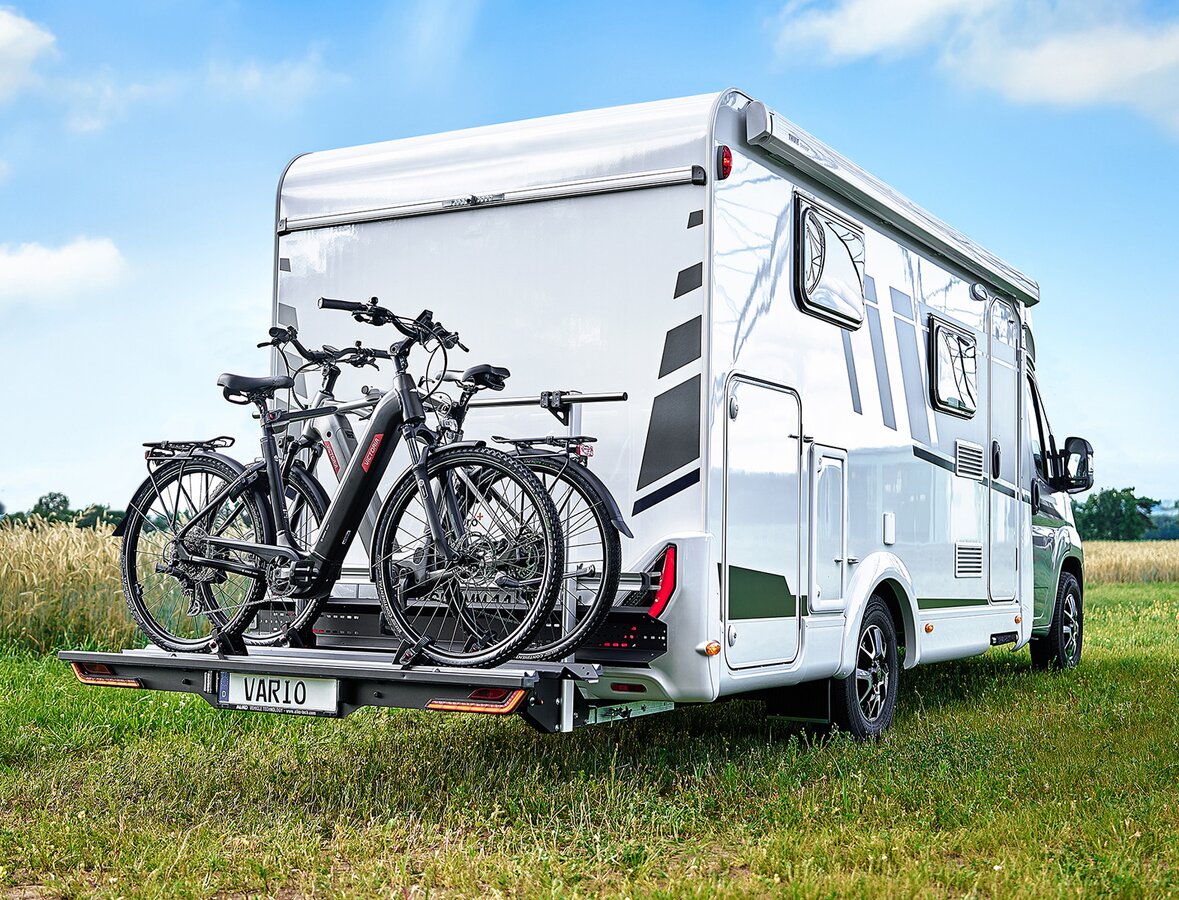
A rear carrier allows you to take bicycles, e-bikes or a scooter with you on holiday easily and remain independent at your destination. Quick trips to the bakery, outings in the area or longer cycling tours are all possible without having to move the motorhome or panel van from its parking spot every time.
Advantages of the AL-KO VT rear carrier systems
Safe construction and convenience for everyday travel
With a suitable rear carrier, you can increase your vehicle’s carrying options without taking up valuable storage inside. Depending on the model, the roof rack systems are made of aluminium or a combination of aluminium and stainless steel, and are designed to meet a range of travel requirements.
Your advantages at a glance:
- safe transport for bicycles, e-bikes or scooters
- vehicle-specific solutions for motorhomes and panel vans
- convenient loading thanks to low loading heights and matching rails
- flexible functions such as folding, swinging or tool-free removal
- greater freedom of movement and mobility at your holiday destination
Which rear carrier is right for you and your vehicle?
Match vehicle type, load and payload correctly
The selection starts with the question of what you want to transport. For conventional bicycles, a lighter system is often sufficient. E-bikes and scooters require a carrier with a correspondingly higher payload due to their greater weight. In addition, the weight of the carrier, the actual load, the permissible rear axle load and the gross vehicle weight must be taken into account.
The vehicle type also plays an important role. Motorhomes and panel vans present different challenges for installation, operation and access to the rear of the vehicle.
Rear carriers for motorhomes
Rear racks for motorhomes are attached to the vehicle frame or to a suitable frame extension, depending on the vehicle, chassis and rear design. When selecting a rack, the bodybuilder’s approval, the rear overhang, the remaining rear axle load and the permissible gross vehicle weight must be taken into account.
|
Model |
Max. payload in kg |
Suitable for |
|
VELO |
80 |
max. 2 e-bikes or max. 3 bicycles |
|
BASIC |
120 |
max. 4 bicycles or 1 scooter + 1 bicycle |
|
VARIO + VARIO LED |
150 |
1 scooter, 4 bicycles or 1 scooter + max. 2 bicycles |
|
LIGERO + LIGERO LED |
150 |
1 scooter or max. 4 bicycles or 1 scooter + 2 bicycles |
Rear carriers for panel vans
For panel vans, access to the rear doors is crucial in addition to vehicle compatibility. The TRIGO-VAN, VELO VAN and VARIO VAN can be swung to the side. With the KAWA, the retaining bracket is removed to allow access to the rear doors. The current statement that panel van carriers can be ‘mounted particularly low’ does not explain any specific advantage in selection and should be omitted.
|
Model |
Max. payload in kg |
Suitable for |
|
TRIGO-VAN |
80 |
up to 3 bicycles or e-bikes |
|
VARIO VAN |
80 |
Up to 4 bicycles/e-bikes or 1 scooter + 2 bicycles |
|
VELO VAN |
120 |
Up to 3 bicycles or e-bikes |
|
KAWA |
150 |
|


Secure installation and loading of rear carriers
A rear carrier must be compatible with the vehicle, the chassis and the intended load. Before choosing, you should always check the technical requirements and the approvals from both vehicle and body manufacturer. The maximum payload of the carrier must not be equated with the actual permissible load on the vehicle.
When loading, the two-wheelers should be positioned evenly and secured with the appropriate rails, support arms and restraints. Heavy batteries or removable attachments should be taken off before your journey if permitted by the manufacturer.
For installation and retrofitting, we recommend consulting a specialist workshop or an AL-KO Customer Centre.

Frequently asked questions about rear carriers
The required carrying capacity depends on the number and weight of bicycles, e-bikes or scooters. In addition, the carrier’s own weight, the rear axle load and the permissible gross vehicle weight must be considered.
Alongside the maximum payload of the rear carrier, you must take into account the system's own weight, the weight of the two-wheelers being transported, the permissible rear axle load and the vehicle’s gross weight. The technically possible carrying capacity of the carrier does not automatically correspond to the actual permissible load.
The key factors are vehicle type, chassis, rear construction and transport requirements. Motorhomes have different construction options compared to panel vans, for which special attention should be paid to access to the rear doors.
Rear carriers for motorhomes are often mounted directly on the vehicle chassis, providing a stable fit with a low loading height. With panel vans, access to the rear doors is especially important. Depending on the system, the carrier can be swung, folded away or moved clear from the vehicle.
Many motorhomes and panel vans can be retrofitted with a suitable rear carrier system. Requirements include a compatible chassis, sufficient load reserves and professional installation.
Many rear carrier systems are suitable for transporting e-bikes. The maximum payload of the carrier, the weight of each individual bicycle and the permissible vehicle load are the deciding factors. Always check the technical specifications of each system before making your choice.