The climate-friendly way to go on holiday
With the rising environmental awareness in society, sustainability aspects are becoming increasingly important for holidays. Electric mobility is the key term of the moment. With the advance of electric cars, making holidays in a caravan, motorhome or panel van climate-friendly is coming into focus.

Der Elektromobilität gehört die Zukunft
Davon ist die AL-KO Vehicle Technology Group überzeugt. „Caravaning weist jetzt schon eine bessere Klimabilanz auf als viele andere Urlaubsformen. Dies wird sich in den nächsten Jahren durch elektrifizierte Antriebstechnologien sogar noch steigern“, sagt Harald Hiller, President & CEO der AL-KO Vehicle Technology Group.
Noch umweltfreundlicher mit Reisemobil und Caravan zu reisen setzt an mehreren Punkten an. AL-KO optimiert mit Green Caravaning das Gesamtsystem „Wir als Komponentenhersteller leisten hier über spezielle Fahrwerke für die Caravaning-Branche unseren Beitrag, beispielsweise mit Leichtbau-Chassis wie Vario X. Außerdem wird Stahl als bevorzugter Werkstoff verwendet, da dieser mit Abstand die beste CO2-Bilanz von Herstellung bis Recycling aufweisen kann“, so Hiller weiter.
Als bedeutender Zulieferer der Caravaning-Branche strebt AL-KO an, dass Herstellung und Anwendung seiner Komponenten maximal zur CO2-Reduzierung beitragen.
Knowing how to overcome obstacles
One challenge of e-mobility is the currently limited range. For a daily journey of several hundred kilometres, an electric motorhome requires a number of high-performance batteries. Looking at the situation for caravans, it is clear that electric cars are, in principle, suitable for towing trailers due to their performance characteristics. Nevertheless, even the most powerful tow vehicles have a relatively low caravan towing capacity. To address this, the AL-KO Vehicle Technology Group is already working on innovative vehicle concepts.
The Green Caravaning approach is to optimise the overall caravan combination in terms of range by various means, so that loss of range when towing a trailer will be significantly reduced in future. The approach is to consistently use lightweight design, an intelligently controlled braking system in the trailer, and optimised aerodynamics to substantially reduce driving resistance.
Pioneering advances for caravan and motorhome
Through the holistic Green Caravaning approach – which includes lightweight design, electrification, aerodynamics and sustainable materials – the CO2 emissions from towing combinations are optimised and primary energy and raw material consumption is reduced.
The further developed lightweight chassis VARIO X ensures, for example, that trailers are up to 30 kg lighter and additional CO2 is saved. "AL-KO manufactures around 60,000 caravan chassis per year, with an increasing proportion built in the bionic VARIO X design," comments Harald Hiller.
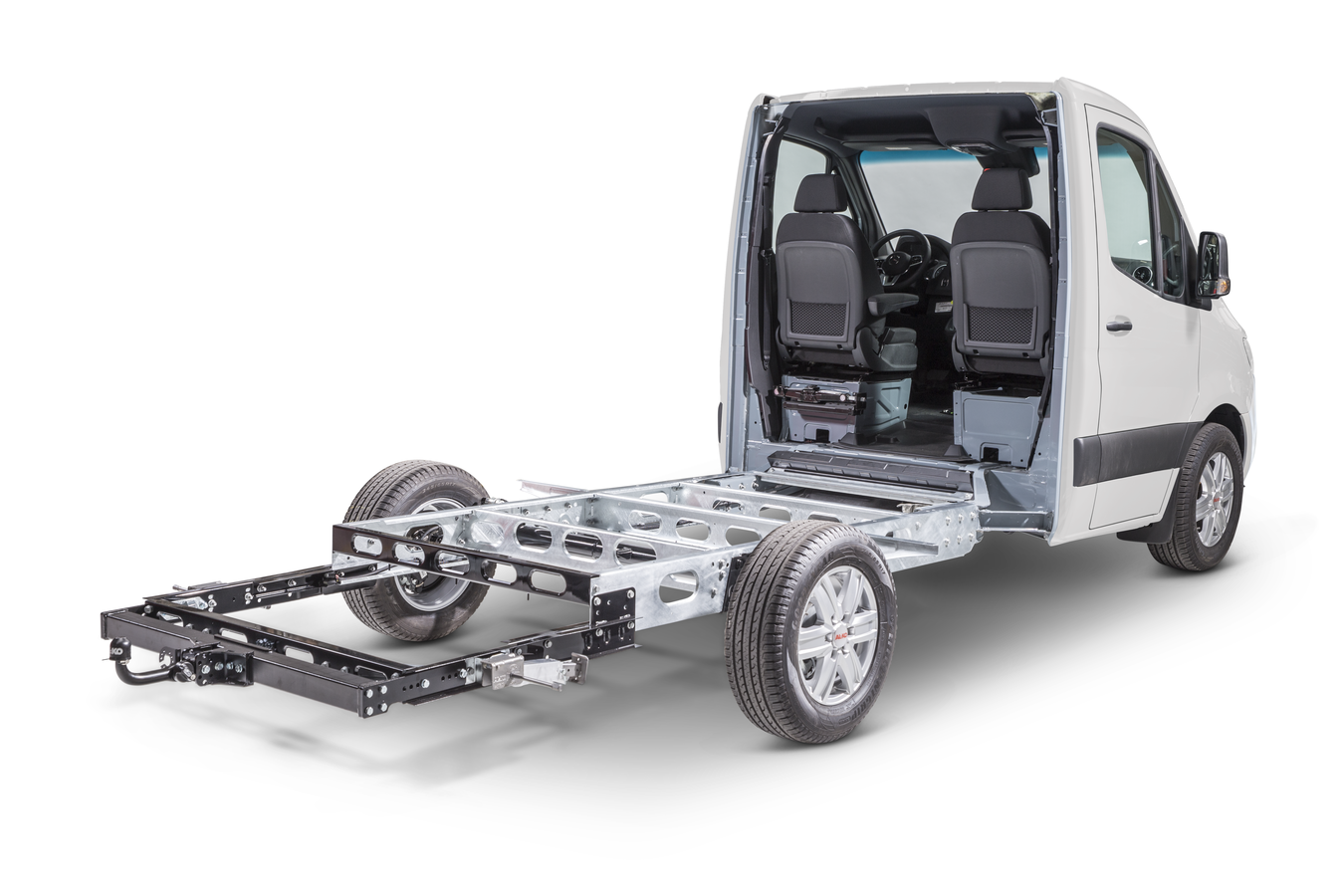
The AL-KO Motor-Chassis (AMC) for motorhomes also continues to set standards in lightweight construction after 35 years of development. Its weight is 30–40 kg lower than the original chassis. In the last four years alone, combined optimisation achieved a weight saving of 7%. The AMC low-frame chassis not only set benchmarks for weight, handling, underfloor storage and driving dynamics. They are also specifically designed to reduce the overall height and therefore the frontal area of (semi-)integrated motorhomes, significantly improving aerodynamics.
More than just a clear conscience
The reasons for e-mobility are many, ranging from conserving environmental resources to arguments in favour of greater cleanliness and sustainability. In the long term, an electric vehicle will not only help protect the climate but will also save you money, as the cost per kilometre travelled with an electric vehicle is lower than with petrol or diesel vehicles. In addition, many cities charge lower fees for climate-friendly vehicles. Thanks to their simpler motors and fewer vulnerable components, electric vehicles are also considered reliable and durable. This means they are also cheaper to maintain in the long run.
Good to know: The ADAC has always recommended taking a break after 2 hours of driving. This means that an e-combination is only considered practical once it achieves a range of more than 200 km – allowing convenient use of the same breaks.
