The climate-friendly way to holiday
As environmental awareness grows, sustainability is becoming more important for holidaymakers. Electromobility is the key word of the moment. With the rise of electric cars, climate-friendly travel with a caravan, motorhome or panel van is increasingly coming into focus.

The future belongs to electromobility
The AL-KO Vehicle Technology Group is convinced of this. "Caravanning already has a better carbon footprint than many other forms of holiday. This will improve further over the coming years thanks to electrified drive technologies," says Harald Hiller, President & CEO of the AL-KO Vehicle Technology Group.
Making travel by motorhome and caravan even more environmentally friendly requires action on several fronts. With Green Caravaning, AL-KO is optimising the entire system: "As a component manufacturer, we are contributing with special chassis for the caravanning sector—for example, with lightweight chassis like Vario X. In addition, steel is used as the preferred material, as it has by far the best CO2 balance from production through to recycling," Hiller continues.
As a major supplier to the caravanning industry, AL-KO aims to ensure both the manufacturing and use of its components make the greatest possible contribution to cutting CO2 emissions.
How to overcome obstacles
One challenge of electromobility is the currently limited range. To cover several hundred kilometres per day, an electric motorhome needs numerous high-performance batteries. Examining the situation for caravans, it can be seen that electric cars are, in fact, technically capable of towing trailers. Nevertheless, even the most powerful towing vehicles typically have a relatively low permissible trailer load for caravans. To address this, the AL-KO Vehicle Technology Group is already working on innovative vehicle concepts.
The Green Caravaning approach aims to optimise the entire towing combination—caravan and tow vehicle—for range using various techniques, so that range losses when towing a trailer will be reduced in future. The goal is to significantly reduce driving resistance through consistent lightweight construction, an intelligently controlled trailer braking system and optimised aerodynamics.
Pioneering developments for caravan and motorhome
Thanks to the holistic Green Caravaning approach—combining lightweight construction, electrification, aerodynamics and sustainable materials—the CO2 output of car and caravan journeys is optimised, while consumption of primary energy and raw materials is reduced.
The latest lightweight chassis VARIO X for example, means trailers can be up to 30 kg lighter, saving additional CO2. "AL-KO produces around 60,000 caravan chassis per year, an increasing number in bionic VARIO X design," comments Harald Hiller.
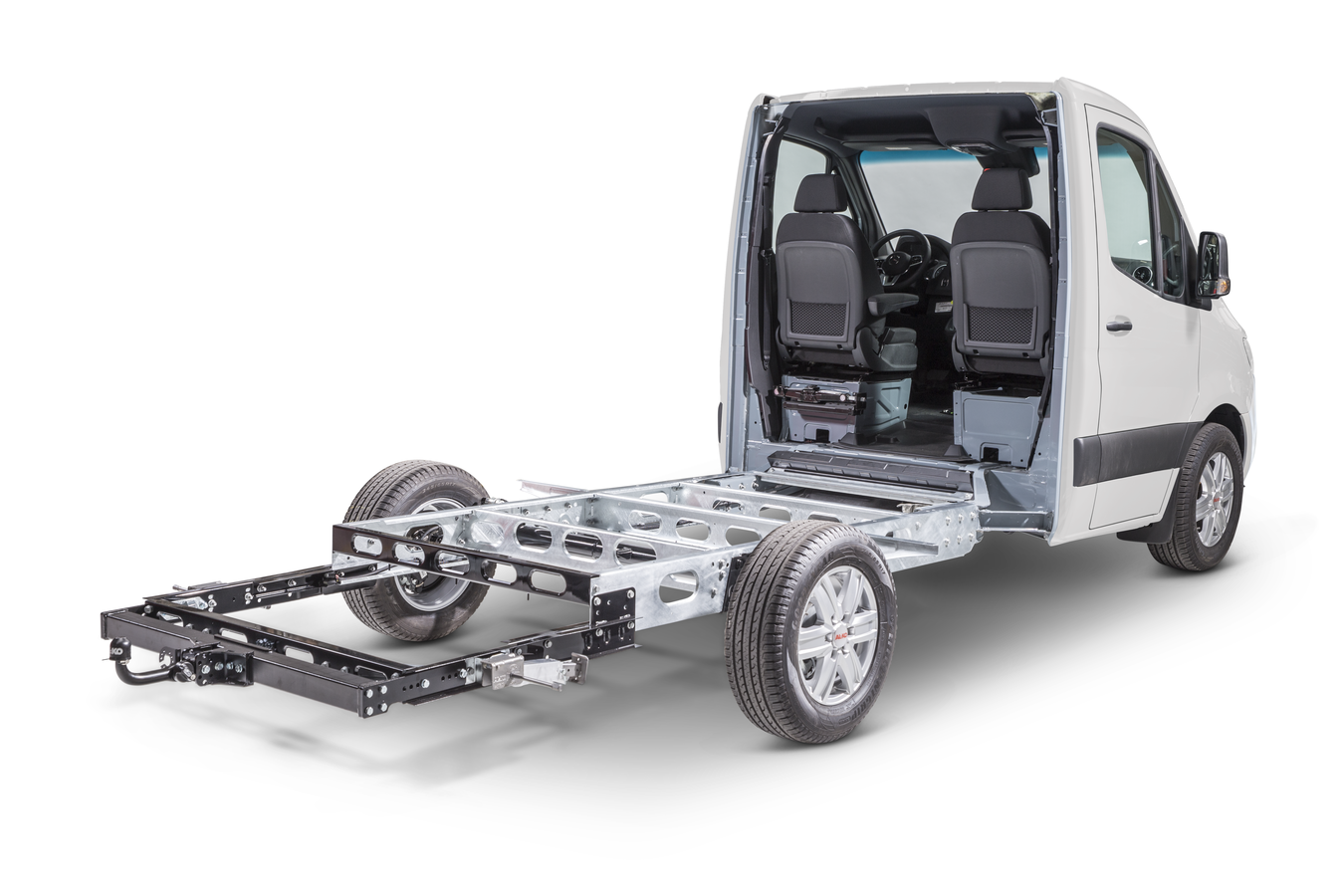
The AL-KO Motor-Chassis (AMC) for motorhomes, which has set standards in lightweight construction for 35 years, also remains an industry benchmark. It offers 30 to 40 kg less weight than the original chassis. Just in the past four years, ongoing optimisation has resulted in a 7 percent reduction in weight. The AMC low-frame chassis not only represent benchmarks for weight, driving comfort, storage space and driving dynamics—they are also specifically designed to reduce the overall height and therefore the frontal area of (semi-)integrated motorhomes, significantly improving aerodynamics.
More than just a good conscience
From protecting natural resources to arguments for greater cleanliness and sustainability, there are many reasons to choose electromobility. In the long term, electric vehicles not only help to protect the climate, but also save money, as the cost per kilometre travelled in an electric vehicle is lower than in petrol or diesel vehicles. Many cities also charge less in fees if the vehicle is climate-friendly. With their simpler motors and fewer wear-prone components, electric vehicles are also considered more reliable and long-lasting. This makes them cheaper to maintain over the long term.
Good to know: The ADAC has always advised planning a break after two hours of driving. This means that a range of over 200 km is only considered practical for an electric car and caravan because it allows for convenient use of scheduled breaks.
