Storing your motorhome and caravan for the winter
The leaves are falling; the days are cooler and the nights are around freezing – for campers, these are the signs to prepare their motorhome or caravan for winter. Proper winterising protects your camper from damage and ensures a relaxed start to the next camping season in spring.

The essentials at a glance
- The conditions at your winter parking spot determine which jobs are needed to store your vehicle for winter.
- Thorough exterior cleaning and optimal care inside will help prevent damage.
- Habitation batteries need special attention, and gas and water lines should be thoroughly drained.
Finding and preparing a place to park for the winter
Once you’ve found a parking space for your camper – whether you use it all year round or rent it just for the winter – you’ll need to consider the specific conditions to decide if additional preparations are required. If the site is an open area with no shelter, pay special attention to the roof, rooflights and seals. Everything must be completely watertight to prevent snow, rain or standing water getting inside. Even leaves, small branches or fir needles on the roof can cause leaks, for example if they press against the seal making it porous. It’s also good practice to park the camper on a slight slope so water can drain away more easily.
If you wish to use a cover or protective sheet for your camper, make sure it does not lay directly on the bodywork – otherwise air circulation will be inadequate, potentially leading to unpleasant odours, damp, and mould. For caravans, there are special covers available for the drawbar and drawbar box to protect these parts from the elements.
If you have a covered outdoor parking space, or a spot in a hall or barn, you won’t need to worry about rain or snow. However, a different risk arises: mice. From experience, the likelihood of a mouse finding its way into your motorhome is especially high in barns and halls. With luck, it will simply hibernate there; at worst, it may cause gnawing damage. Thorough emptying and cleaning help ensure rodents are not attracted in the first place. An ultrasonic device can also provide additional deterrence.
Exterior cleaning and technical checks
Washing your camper before winter storage is much like a spring clean at home – just done before instead of after winter, and it’s great for your motorhome or caravan. It’s equally important to ensure all the technical components are in good condition, so they make it through the winter unscathed.
Thorough exterior cleaning
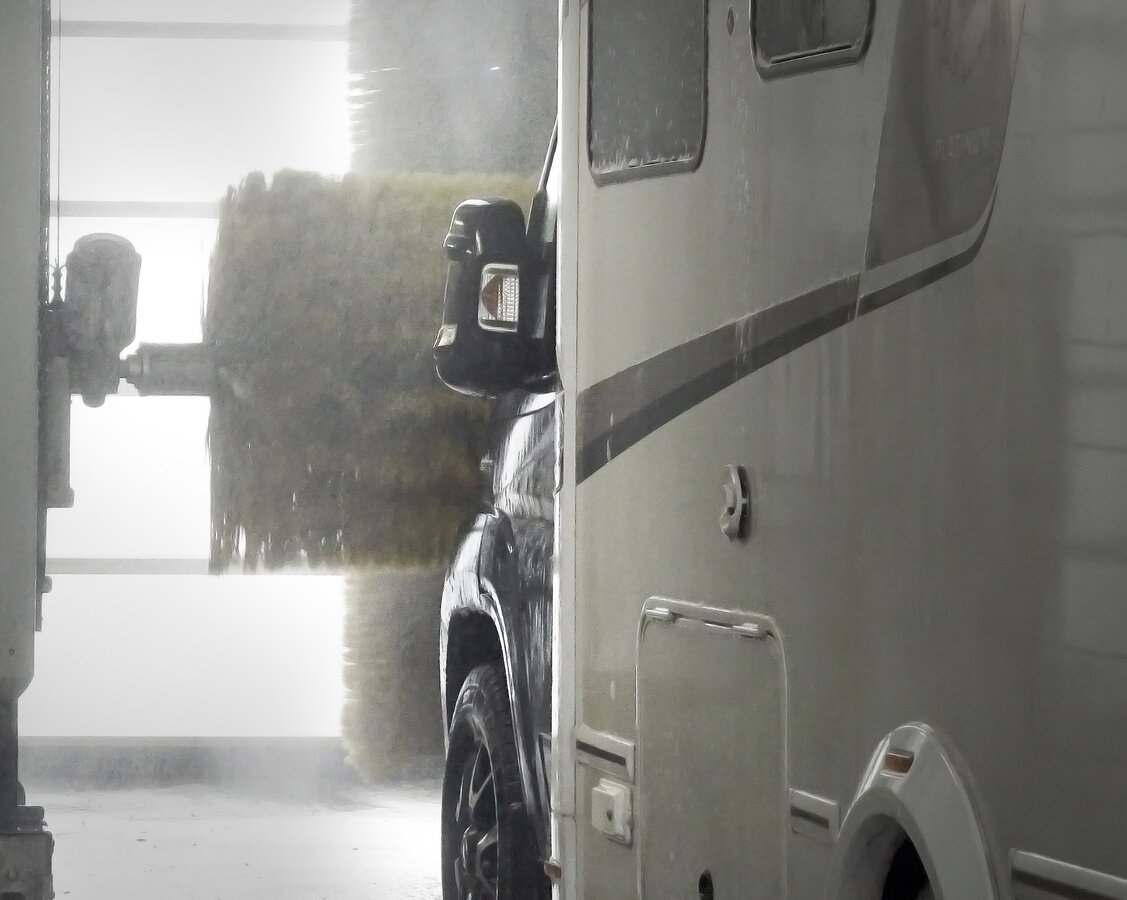
If dirt isn’t washed off, changing temperatures and growing damp can lead to leaks at seams or rooflights. You can wash your vehicle at a designated motorhome wash area (for self-service) or at a facility for lorries; there are special washing stations for these large vehicles.
Start by rinsing the outer shell and gently scrubbing it with a brush and cleaning agent – ideally, also perform an underbody wash to remove dirt from the chassis. Don’t forget the wheel arches. Windows and roof hatches are usually made of acrylic and should be cleaned with the appropriate products and cloths to prevent scratches. Allow everything to dry – and that’s your exterior clean done. Depending on the size of the camper, this can take quite some time.
Check tyre pressures
If you’re already on your way to or from washing your vehicle, it’s a good opportunity to slightly increase the tyre pressures – up to 0.5 bar above the usual value is recommended.
Turn off gas bottles and drain water lines
There are a few jobs to do once you return to the winter storage location – different from ordinary travel breaks during the season. As your camper (depending on the pitch) may be exposed to freezing temperatures over winter, it’s best to drain all the water completely – not only from the fresh and waste tank, but also from the water heater, boiler and, importantly, from all the pipes. Blowing out the pipes helps protect taps from frost damage, which can lead to expensive repairs and replacement parts. A blown-up balloon can help: place it over the tap and let the outgoing air clear the pipe. Optionally, after everything’s drained and the pump is off, you can open the taps again to ensure they’re empty.
For the gas supply, the cylinder valves should be turned off and hoses unscrewed. Then, blow out the gas pipes as well – just open the hob for a few minutes to let any residual gas escape.
Take care of the habitation battery/batteries
If you cannot regularly charge your 12-volt habitation batteries during winter – by connecting to mains or using sufficient solar power – it’s best to remove the battery/batteries to prevent deep discharge. The requirements and charging cycles vary depending on battery type and size, but if you cannot charge for several months, removal and storage is the best way to protect your batteries. Before removal, make sure they are fully charged. They’ll get through the winter best if stored in a frost-free room.
Additional equipment: suspension systems, manoeuvring system & more
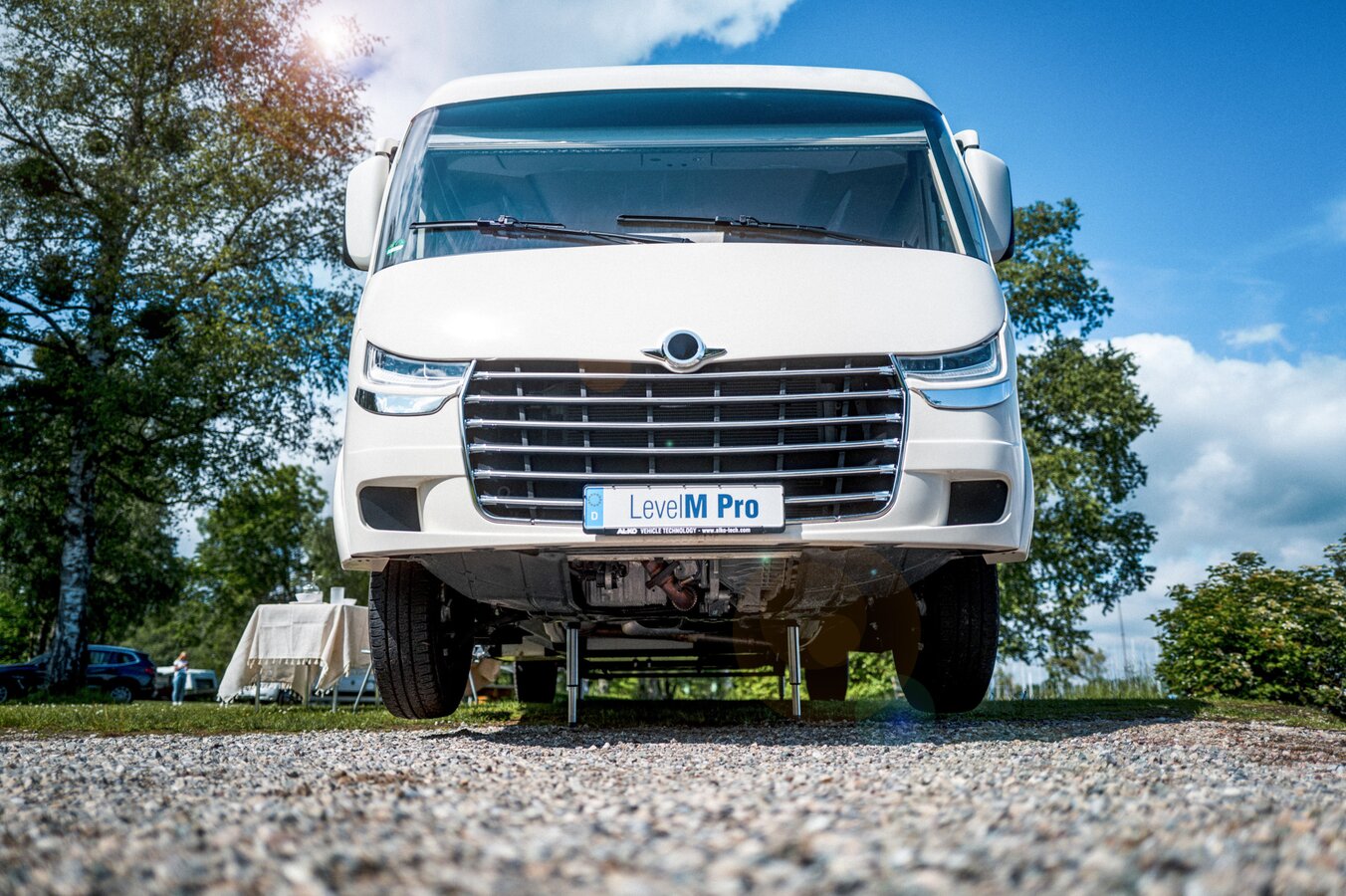
All AL-KO VT suspension and support systems, such as HY4 or LevelM Pro, can be put into winter storage without the need for maintenance on your motorhome or panel van. If air suspension is installed, it’s advisable to set it to driving height, and for manual air suspension, to use the normal operating pressure so the air bellows are not completely deflated. If combined with a support system, simply leave the air suspension in travel-ready condition or expressly deactivate any automatic system. This way, the support system can stabilise the vehicle without the air suspension unwinding. Optional equipment such as the AL-KO VT MAMMUT manoeuvring system, ATC anti-snaking system or the stabiliser coupling require no special maintenance for the winter break.
Clean and store accessories
Aerials, satellite dishes, awnings and canopies should also be thoroughly cleaned before storage. For permanently installed awnings, it’s a good idea to lubricate the joints. Bicycle covers, awning carpets and other accessories also keep better over winter if stored clean – with no crumbs or mud left behind – and are ready for use again in spring.
Preparing the interior for winter
Preparing your camper’s interior for winter storage isn’t that different from your usual post-trip routine, but might be a little more thorough in some places. Here are the key steps:
- Remove all food and drinks
- Clean and dry the fridge, and leave the fridge door open
- Thoroughly clean the kitchen or kitchenette
- Clean the bathroom and rinse the toilet cassette, for example with a chlorine-water mix
- Clean furniture with gentle products, e.g. mild soapy water
- Stand seat cushions on end for better air circulation
- Vacuum and clean all surfaces, floors and inside cupboards to get rid of crumbs and food debris
- Where possible, leave cupboards and lockers open for good air flow
- Remove moisture-absorbing materials such as clothing, towels, kitchen roll or toilet paper from the camper
- Take out electronic devices
To keep locks and hinges working smoothly next season, lubricate them – there are suitable products for sealing rubbers at camping shops. For caravans, give the handbrake and jockey wheel a touch of grease too.
Levelling the vehicle
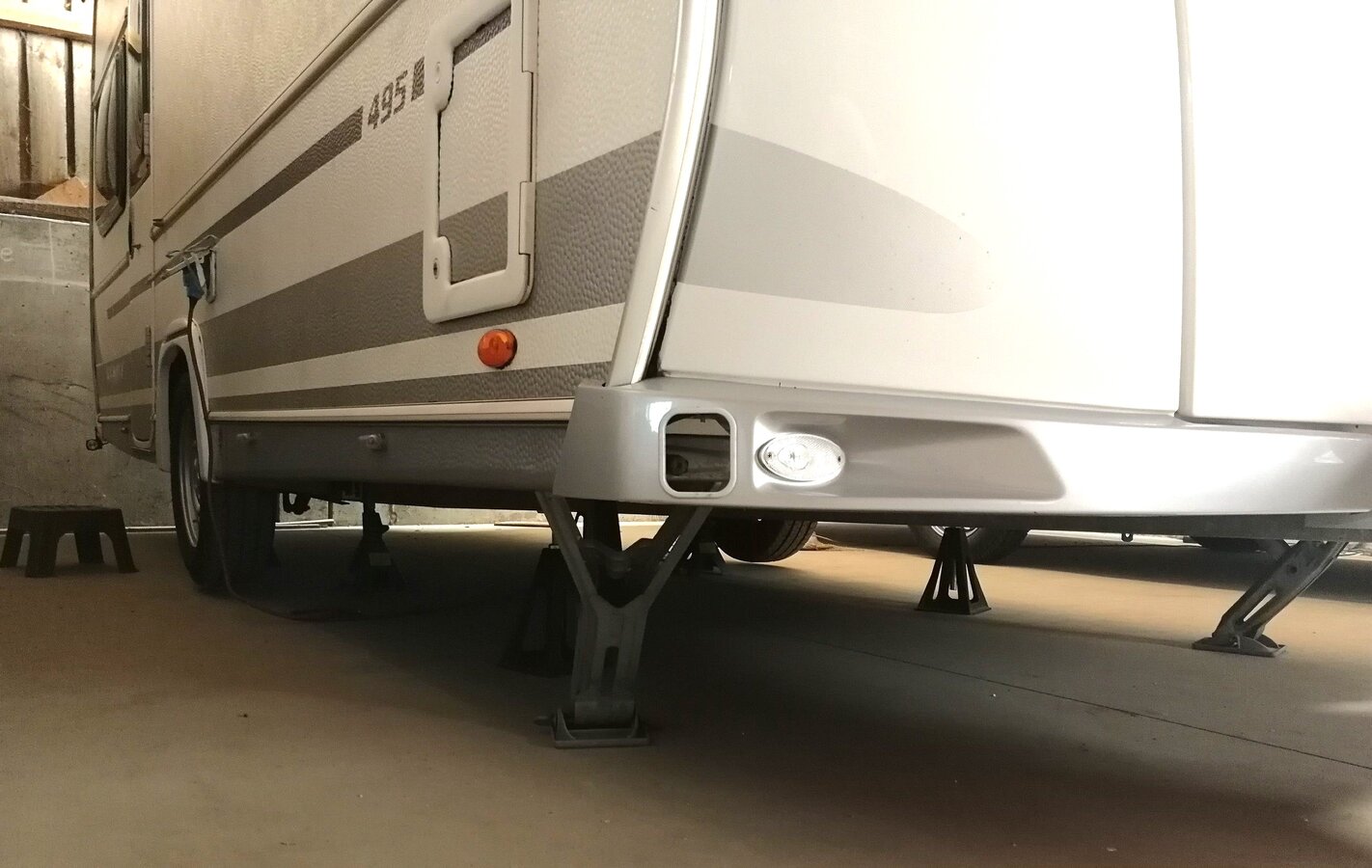
When everything is ready, bring the vehicle to level and compensate for any unevenness with ramps or wooden boards. If you have a support system installed, you can use it to level the vehicle. On a caravan, lower the corner steadies for stability when parked.
Note: You must never level the caravan using the steadies – this can cause lasting structural damage! For even greater accuracy, you can also use axle stands or jacks to relieve some of the weight from the axle, but make sure the wheels remain firmly on the ground. Last tasks: pour antifreeze into the engine and windscreen washer system, and fold the wipers away from the glass so the rubber blades don’t freeze to the windscreen. Tip: if possible, avoid engaging the handbrake over winter, as the brake shoes could stick to the drum.
Fit anti-theft protection if required
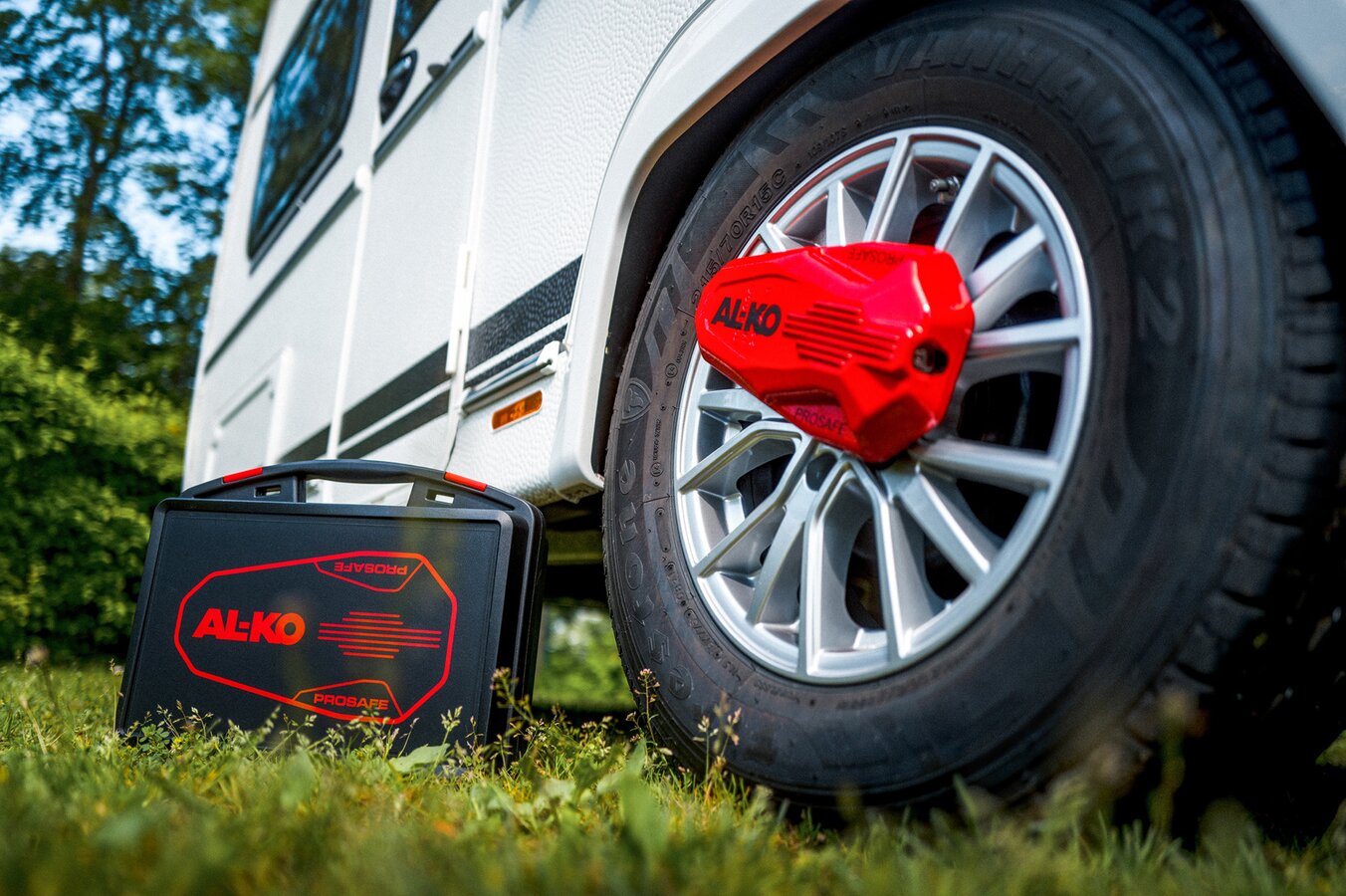
Finally, it’s advisable to secure the camper while it’s in winter storage to prevent quick access by thieves. The best options for caravan theft protection include drawbar locks and wheel clamps.
Are you a winter camper?
Fancy some snowy adventures, skiing and romantic evenings in your motorhome with the cold outside? Find tips on winter camping here!

After signing up, you will receive exclusive information about products, new developments, offers and more direct to your inbox.