Motorhome, panel van and caravan ready for the new season
It’s time to bring your recreational vehicle out of hibernation. We’ve put together an overview of the most important checks, cleaning and maintenance tasks to help you get your camping season off to a perfect start!

The essentials at a glance
- Complete inspection for visible damage inside and on the vehicle exterior.
- Function checks, servicing and maintenance of technology in both caravan and motorhome.
- Cleaning, restocking, packing – you’re ready for the new camping season!
Initial full check at the winter storage site
When visiting your recreational vehicle after the winter, you should give it a thorough inspection – inside and out.
Exterior check
- Are there any visible damages on the vehicle (scratches, dents, dirt build-up, ...)?
- Are there any damp or mouldy areas on the vehicle?
- What is the condition of the tyres: is the tyre pressure sufficient? Are there any clear signs of damage due to long periods of standing? Is the tread depth still okay?
- Are the MOT and gas inspection up to date?
- Do the corner steadies on the caravan extend and retract smoothly?
- Can the drawbar on the caravan be pushed in and out easily?
- Do the locks on the service hatches and doors lock smoothly?
Interior check
- Does it smell damp or mouldy inside? Is the interior climate okay?
- Are there damp patches, for example in the bathroom, the cupboards or on the floor?
- Are cushions and the mattress (if left inside for the winter) dry? Is it dry inside the cupboards?
- Are there traces of mice inside the recreational vehicle?
- Visual check inside the water tanks: are there any residues or traces?
Is everything working? Check and care for your vehicle!
Once the initial visual check is done and everything looks good (hopefully), the next step is to check functions and systems. Depending on what you removed or disconnected for winter – for example, vehicle batteries, gas bottles – the first step is to reinstall these so you can test everything.
Our top 10 checklist
- Are the vehicle lights working: front, rear, brake lights, indicators, rear fog lamp, reversing light?
- Are all fluid levels – such as engine oil and coolant – correct?
- Can you release and reapply the handbrake smoothly?
- Are the electrics and mechanics of the towing connection on the caravan working properly?
- Electrical circuit: do the auxiliary batteries charge on shore power or solar? Does the interior lighting work? Do both 12 V and 230 V sockets have power?
- Water system: does the water pump, taps, toilet flush and boiler work as they should?
- Gas supply: can you switch on the hob, heating and fridge without problems?
- Fridge: does it run on gas, 12 V and 230 V (depending on model)?
- Are any additional features like satellite system, manoeuvring system & co. working as they should?
- Can you wind out and in the awning? Is it damaged and in need of repair?
In addition to these functional checks, your recreational vehicle will benefit from a few maintenance tasks:
- Treat rubber seals (windows, doors, toilet cassette) with appropriate care products (for example, rubber care spray with silicone)
- Lubricate locks and hinges with resin- and acid-free oil spray
- Clean and thoroughly flush the fresh- and waste-water tanks
- Treat the caravan's steady legs with spray grease.
Maintenance and care of additional features
Pay special attention to the technical add-on equipment of your vehicle when bringing it out of winter storage.
AL-KO VT suspension systems for motorhomes are usually maintenance-free – no specific action is needed unless you notice something isn't working, in which case please consult a specialist workshop!
For hydraulic support systems for motorhomes such as the LevelM Pro or HY4, you will find information on maintenance intervals in the operating manual. The work should be carried out by a specialist. The same applies to panel vans. Maintenance generally consists of cleaning and a visual inspection; changing the hydraulic oil may also be necessary. For mechanical support systems, maintenance and care depend on the model. Generally, you should clean bearings and pivot points and lubricate them with spray grease afterwards. If the entire support leg is dirty, clean it thoroughly too.
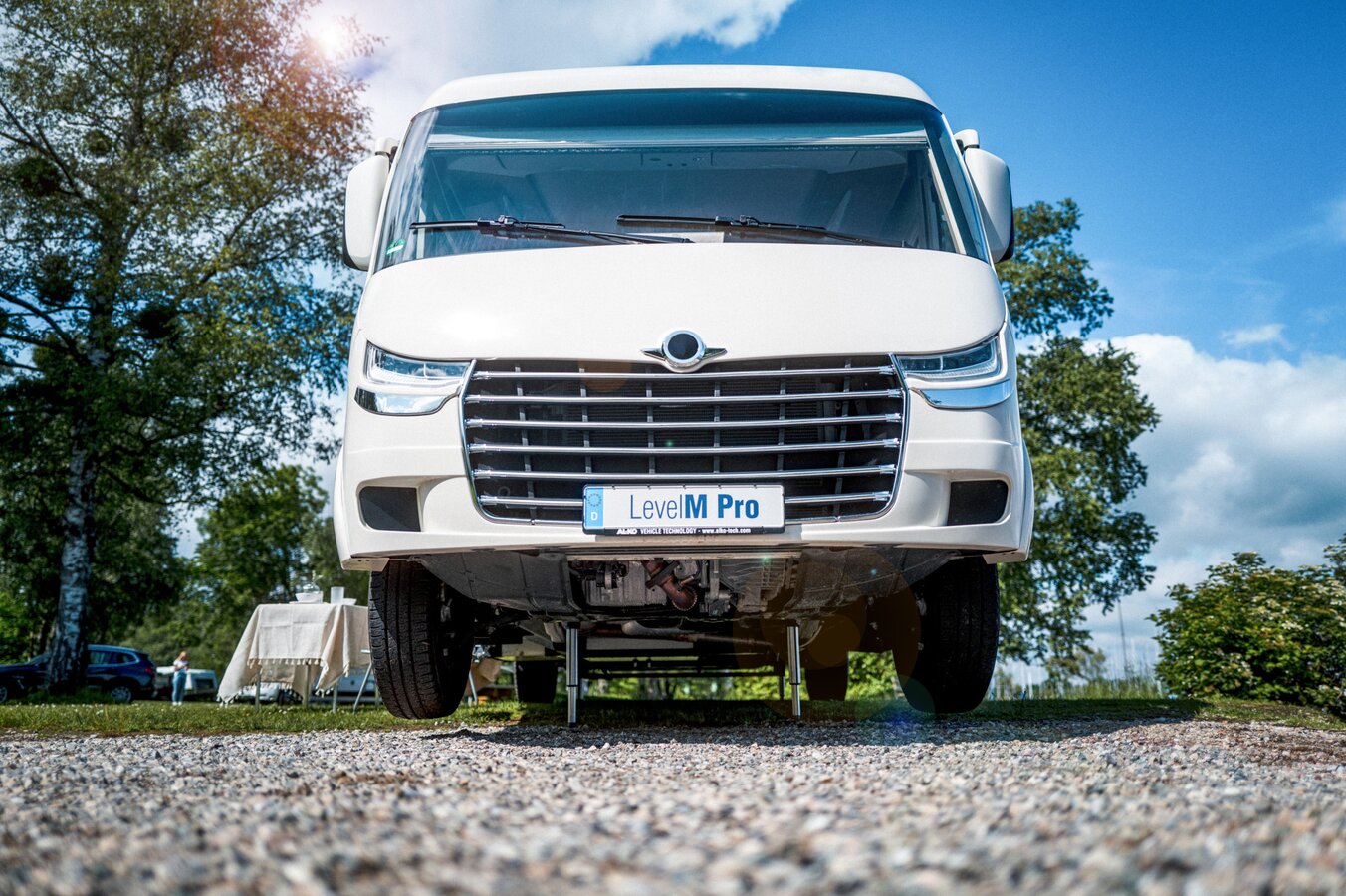
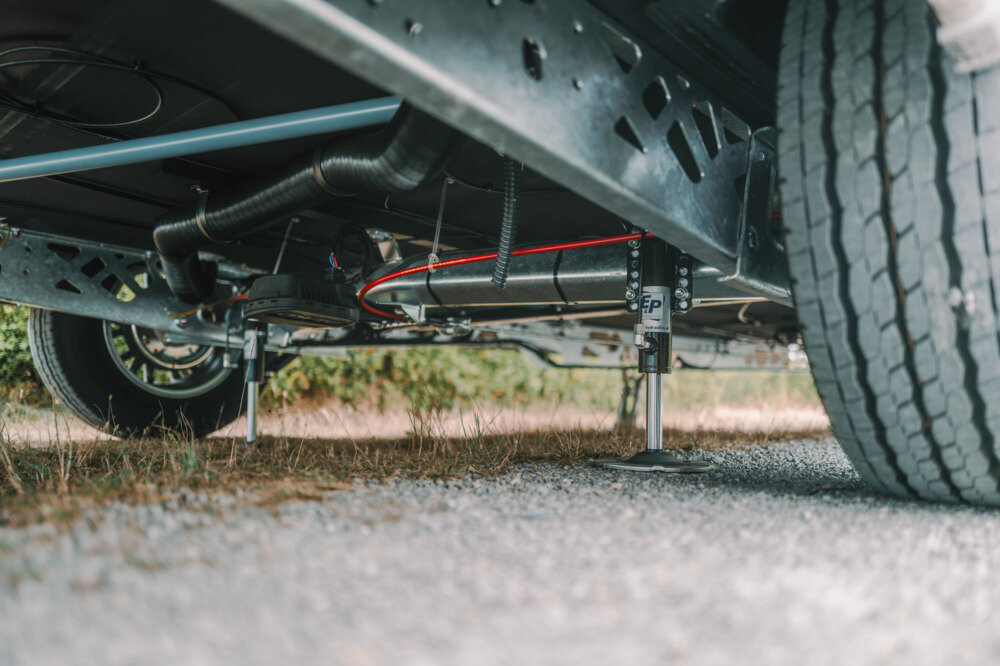
For hydraulic support systems for caravans such as the Level C, it is also important to observe the maintenance intervals stated in the operating manual in order for everything to function correctly. The caravan steady legs benefit from a little grease or oil to ensure smooth extension and retraction. You should also regularly clean the spindle and apply fresh grease (for example, a dry lubricant based on Teflon).
Special care is required for your stabiliser coupling (AKS) on your caravan, if present, as well as the corresponding towball on the towing vehicle. Clean but do not grease the towbar coupling on the car, as grease will impair the function of the AKS. It’s best to use fine sandpaper until it’s bright and shiny again. For new towbars, remove the paint from the ball completely before the first journey, as it can stick to the friction pads.
If the wear indicator on the AKS is in the green, everything is working properly. If it shows red or creaks when driving, the towbar on the car, the AKS and the friction pads must be checked and, if necessary, replaced. You can ask a workshop to do this, or do it yourself: you can get replacement parts from AL-KO VT or a caravan accessory retailer. Towbars without an AKS are simply cleaned and greased as usual.
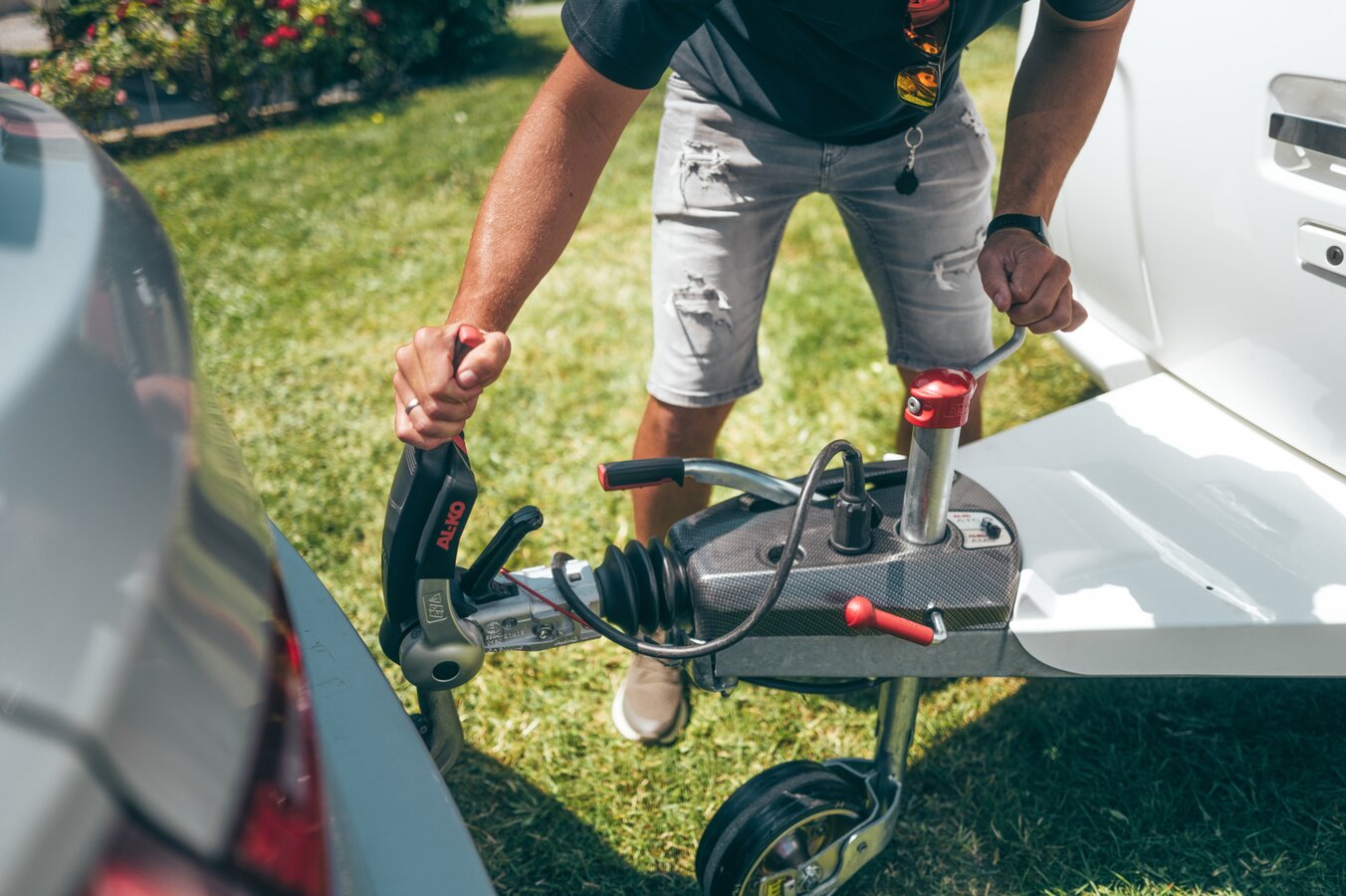
Not an additional feature, but an important piece of basic equipment is the overrun brake on the caravan. This must move freely – you will find the lever on the drawbar. The self-adjusting drum brake does adjust itself if play between the brake shoes and drum becomes too great as a result of wear, as long as the maintenance intervals with proper servicing in a specialist workshop are observed.
The AL-KO VT torsion bar rear axle should also be lubricated at least once a year. As a rule of thumb, this is around every 20,000 kilometres or after long periods of standing, such as at the start of the season. A high-temperature grease is suitable for this.
Spring cleaning for your home on four wheels
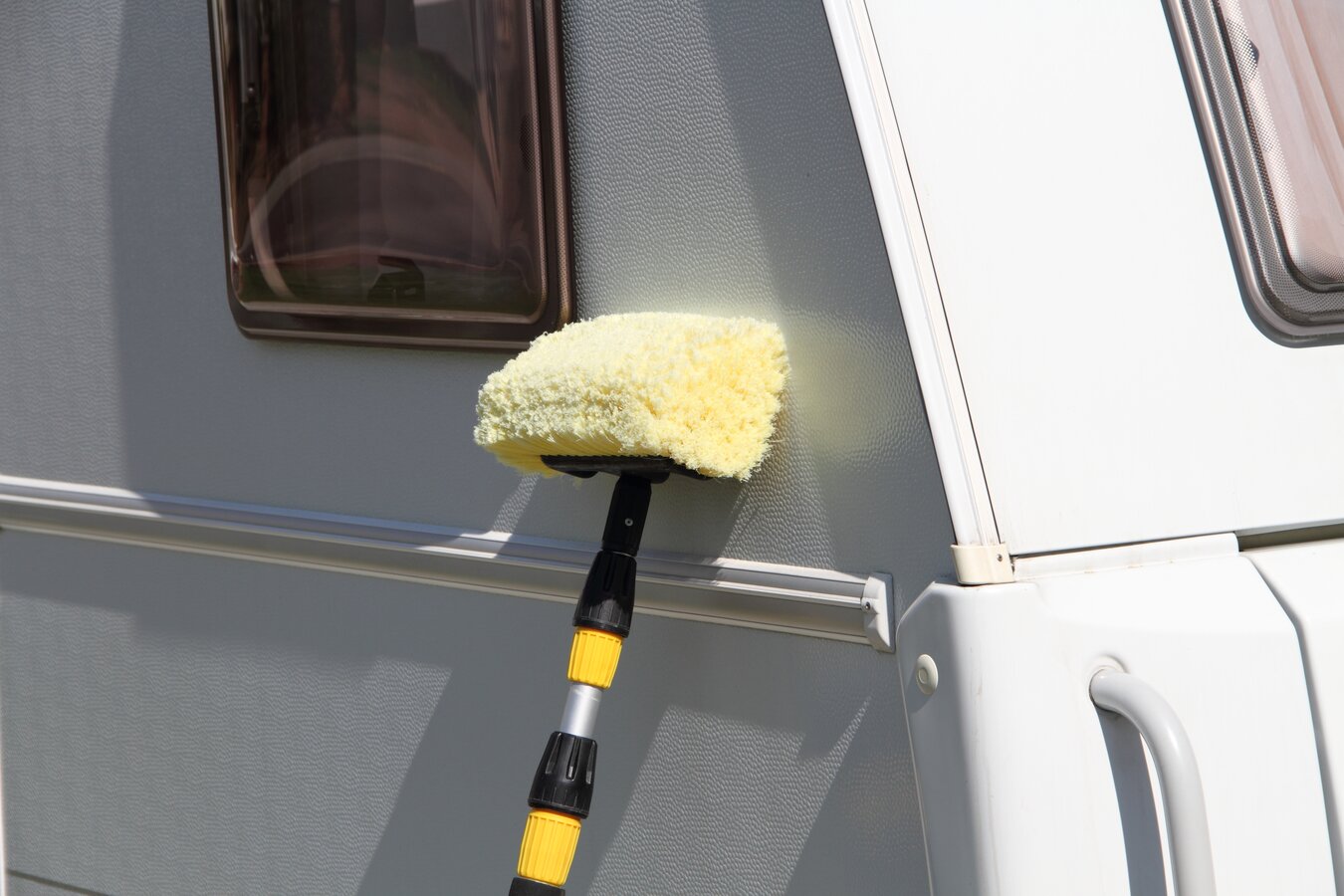
Once all technical systems have been checked, serviced and maintained, it's time for the finishing touch: cleaning. Regardless of where the camper spent the winter, there will always be dirt and dust build-up, so a thorough exterior clean is advisable.
You can clean the exterior at an authorised wash area (self-wash bay) for motorhomes, caravans, panel vans or even lorries. There are also special vehicle washes for these larger vehicles. Start by rinsing the exterior and carefully scrubbing with a brush and cleaner – if possible, also include an underbody wash to free the chassis from dirt. Don't forget the wheel arches. Windows and rooflights are usually acrylic, so they should be cleaned using appropriate products to prevent scratches. Either dry by hand or leave it to dry naturally. Don't forget the awning: wind it out, check for any damp patches or dirt build-up, and clean if necessary.
Depending on how thoroughly you cleaned your camper internally before winter, the spring clean can be short or more comprehensive. Always air the interior thoroughly to let in fresh air and dust as needed – do more only if required. The same applies to an awning if you have one. In any case, it is advisable to lay it out on dry ground at least once, check for damage and brush or wipe it down as needed. After cleaning, treat the seams and surfaces with waterproofing spray.
Load up your recreational vehicle... and off you go!
Depending on what you took out of your recreational vehicle for winter storage, it’s now time to load it all back in – from camping furniture and kitchen equipment to books, games and toiletries.
Check the basic equipment for condition and completeness to make sure you’re prepared, and see what might need replacing. This includes items such as:
- Adaptors, power cables and extension leads
- Levelling ramps
- Camping furniture
- Watering can and hose
- Pegs for the awning or tent
- Sun canopy
- Support pads for the steadies
- Awning
- Warning signs
- Water canisters
For a comprehensive overview of camping equipment, see this camping checklist.
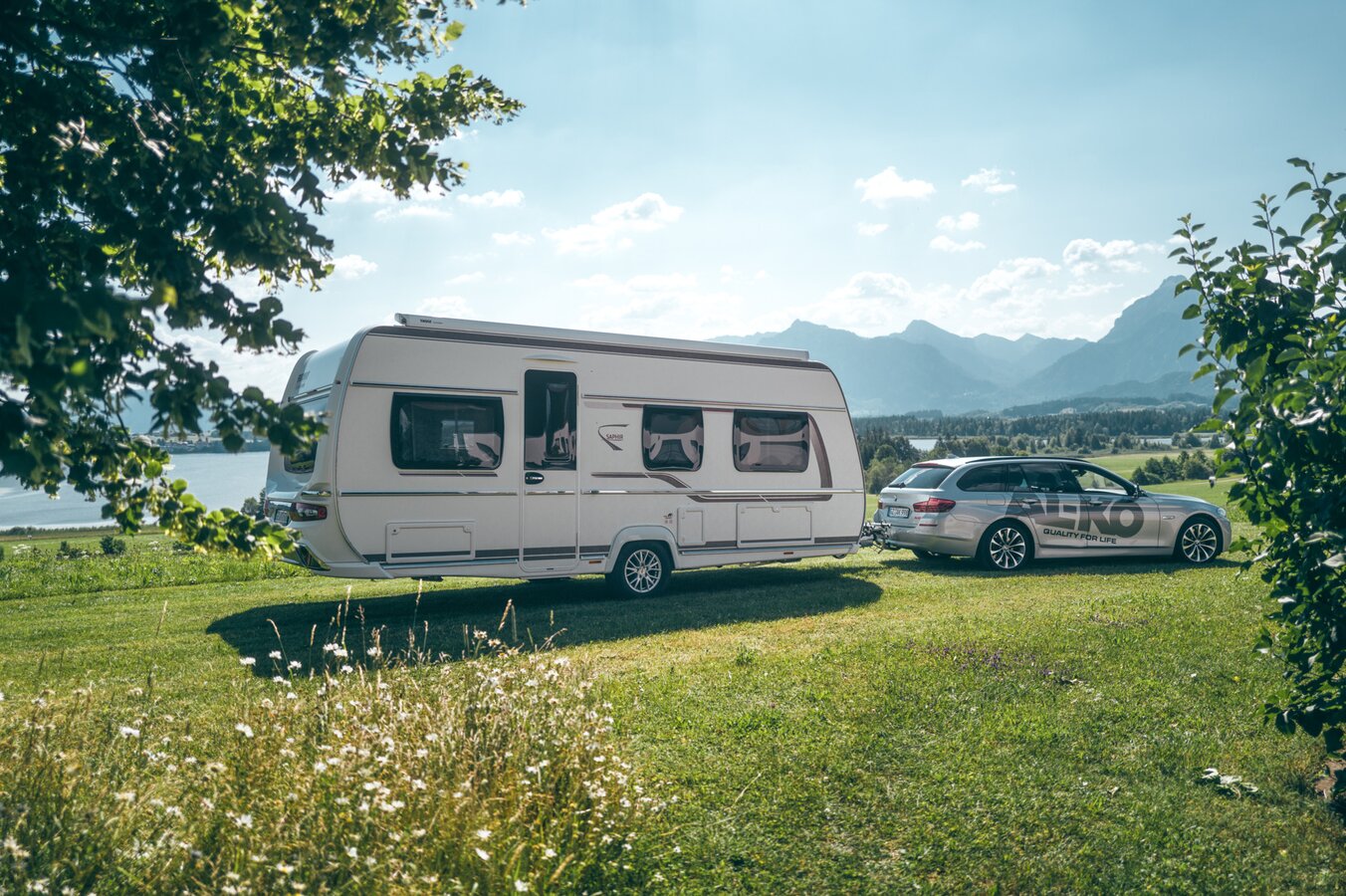
Are you and your motorhome or caravan ready to go?
We wish you safe travels and a wonderful camping season!

After registering, you will receive exclusive information about products, updates, offers and more directly in your email inbox.