AL-KO VT's tips for winter camping – from gas supplies to thermal covers
For some campers, winter is a favourite time to travel! Snow-covered slopes, stunning mountain views in the sunshine, or cosy evenings in a snug, warm motorhome – a dream scenario for winter fans! To make sure you're well prepared for your winter camping trip, we've put together seven key tips.

The essentials at a glance
- It's a good idea to do a thorough vehicle check before setting off on your winter holiday.
- Having enough gas and heating properly are vital for a stress-free break.
- Never choose a pitch beneath snow-covered trees, and regularly clear the roof of snow.
Before your journey starts
Starter battery, oil level & more: Before every journey, always check your motorhome or the towing vehicle for your caravan so you can avoid preventable surprises on holiday.
Tip 1: Thorough vehicle check
The following extra checks are recommended for winter journeys:
- Check the lighting system
- Test heating and blower
- Keep jump leads, ice scraper, brush, de-icer spray, etc. easily accessible
- Top up the radiator and windscreen washer system with antifreeze
- Check the wiper blades are working properly
- Measure tyre tread depth
Winter tyres are essential for motorhomes and panel vans. Alternatively, all-weather tyres with the snowflake symbol are also suitable. The tyres must have more than the minimum tread depth. Snow chains for the driving axle should be carried if you plan to drive into mountainous areas and cross steep passes. In Germany, there is no legal requirement for winter tyres on caravans, but depending on your destination they are highly recommended. Snow chains for the towing vehicle should be kept in the boot if you are travelling to alpine regions.
Tip 2: Add extra cold protection
In freezing temperatures in the minus double-digits, the cold creeps in through windows, doors and roof hatches. If your motorhome or caravan has insulated glazing, that's already an advantage – it keeps warmth inside compared to single glazing. However, much of the heat loss occurs via the cab windows and doors, so it is worth investing in thermal covers or mats for motorhomes, which are best fitted to the outside. Caravans can also be insulated with a drawbar box cover from the outside.
Thermal curtains between the cab and living area help in cold conditions. For panel vans, tailor-made rear door insulation is available. Additional heating tapes can be fitted to avoid external water pipes or tanks freezing. Some camper models already have heated water tanks. There are also special antifreeze agents for camping toilets with their own flush tank and for grey water and waste water tanks.
Tip 3: Estimate your gas requirements correctly
Gas usage during winter camping is considerably higher than during the rest of the year: more heating, more cooking, more hot water for tea, coffee & co. Some campers also need gas for the boiler and the fridge. Running out of gas in winter is not just annoying but can be a real problem in low temperatures, such as frozen pipes or damp in the motorhome.
So, always make sure you have enough gas. Figures vary, but between three and five kilograms of gas per 24 hours is realistic, depending on the size of the recreational vehicle. Ensure you get the right winter gas mix. In Germany, gas bottles mostly contain propane with only a small percentage of butane, which is ideal for winter use.
There are also special winter gas mixtures for the cold season: these contain propane and isobutane. Pure propane has an even lower boiling point, but the mixture gives the best balance between performance and consumption – so you're safe even in arctic conditions.
Tip 4: Electronics for greater comfort
Whether battery management, solar controller or app monitoring: With connected, intelligent electronics, you can manage the energy supply in your home on wheels efficiently and comfortably.

On the pitch or campsite
Once you arrive at your destination, especially in wintry regions, pay careful attention to your chosen pitch and from now on, heating can also (almost) run continuously.
Tip 5: Safe and level pitch
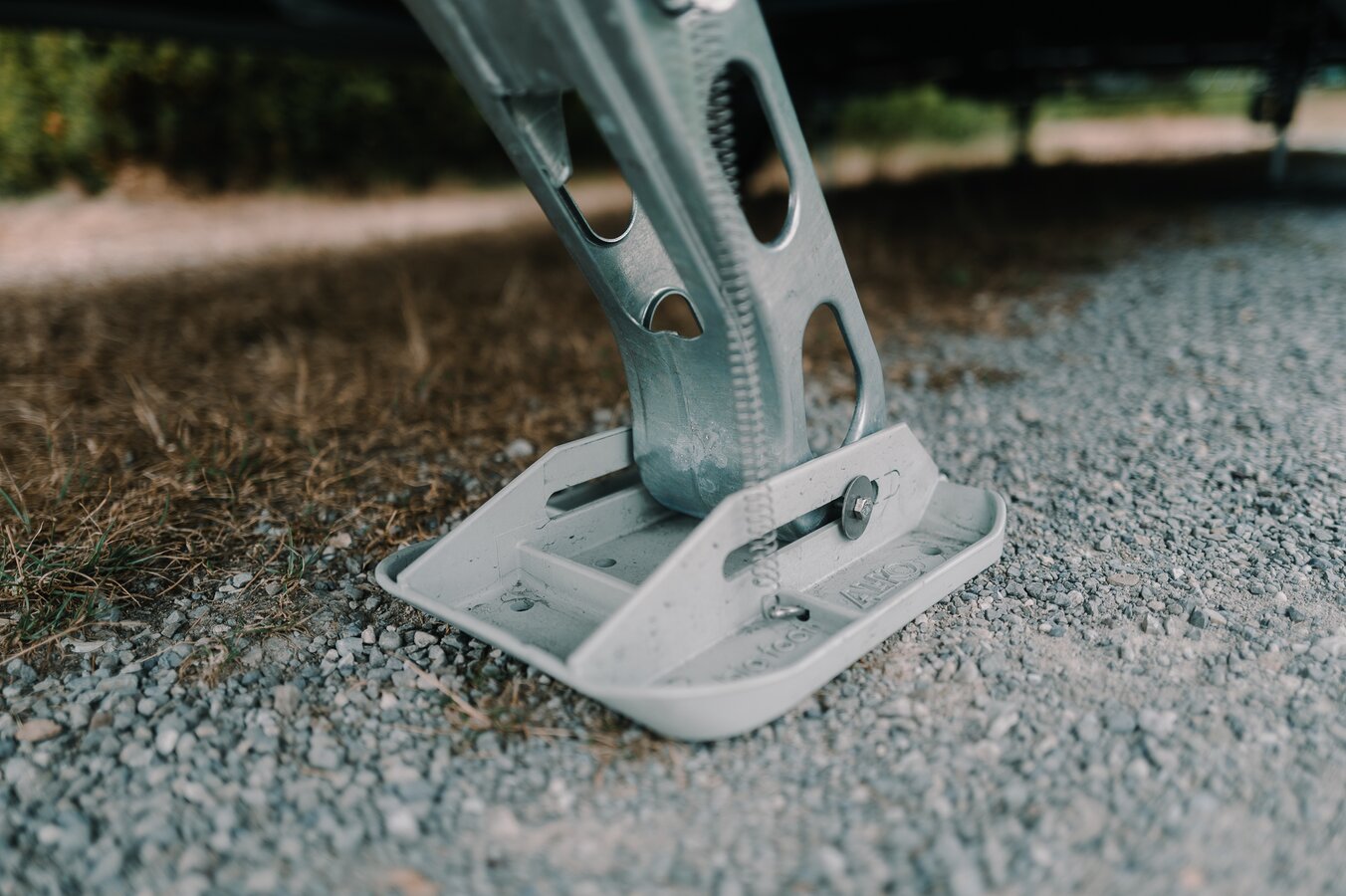
A tree canopy can hold a lot of snow that may fall suddenly. So, never park under trees laden with snow. Falling branches or lumps of ice can cause severe damage to your motorhome or caravan.
It's important to have a level pitch, as the handbrake should not be applied in winter to prevent the cables freezing. On snowy, wet ground, the Big Foot from AL-KO gives a secure footing; for motorhomes, hydraulic support legs such as HY4 or LevelM Pro add even more comfort. On very soft or muddy ground, large additional support plates can be used underneath.
Tip 6: Keep heating adequately
Heating isn’t just about comfort in winter – it’s vital to the indoor climate in your panel van, motorhome or caravan, as it prevents moisture and even mould from developing. It’s important to ensure heat is distributed evenly throughout the vehicle, so it doesn’t build up in corners. Regular heating at a consistent base temperature is better than letting the vehicle cool right down and heating up again. We recommend packing a small electric heater as a backup, just in case you run out of gas and can’t replace it immediately. Important: The ventilation outlets must always remain open, even in low temperatures!
If you’ve set up an awning, it will keep out some of the cold air and give you extra storage for wet shoes and clothing. In this extra living space, awning carpets and catalytic or infrared heaters will keep things cosy on frosty days. Draught skirts, which can be fitted in the lower awning rails, also help keep cold out from beneath.
Tip 7: Regularly clear snow
If you experience heavy snowfall during your winter holiday, it will make for beautiful landscapes but also means work: clear snow from beneath your caravan or motorhome so the air inlets and outlets for your gas appliances stay free. If new snow has fallen, clear the roof and especially the vehicle’s exhaust chimney to prevent exhaust gases building up inside. Always keep the side and roof ventilation openings clear, otherwise there is a risk of suffocation. If you have an awning, make sure it’s kept free of snow and ice – otherwise, it could collapse under the weight.
Equipment for winter campers – at a glance
Below is our must-have packing list for worry-free winter camping:
- Ladder
- Brush
- Shovel/folding spade
- Jump leads, ice scraper, de-icer spray
- Antifreeze
- Extra gas bottle(s)
- Thermal mats and covers, draught skirts, winter cover for fridge vents, drawbar weather protection
- Heating tapes for tanks and pipes
- Doormat
- Awning (if required), including accessories
- Extra support plates
- Electric fan heater, infrared or catalytic heater
- Warm clothing and shoes
- Lined work gloves
- Warm bedding
- Plenty of blankets
Our tip: Sign up to the AL-KO newsletter! Once registered, you'll receive exclusive information on products, news, offers and more, straight to your inbox.

Once registered, you'll receive exclusive information on products, new releases, offers and more, straight to your inbox.