Caravan, motorhome or panel van: Which vehicle suits your camping holiday?
A camping holiday means freedom, adventure and flexibility – as long as the vehicle matches your needs. Whether you prefer a classic trailer (caravan), a fully equipped motorhome or a compact panel van, your choice will depend on many factors: trip duration, required comfort, flexibility on-site, your budget and everyday suitability. This article highlights the key advantages and disadvantages of the three vehicle types – caravan, motorhome and panel van (campervan/transporter as motorhome) – and provides guidance to help you make your decision.

At a glance
- Direct comparison of caravan, motorhome and panel van
- Differences, advantages and disadvantages clearly presented
- Which vehicle type suits your needs? We help you decide.
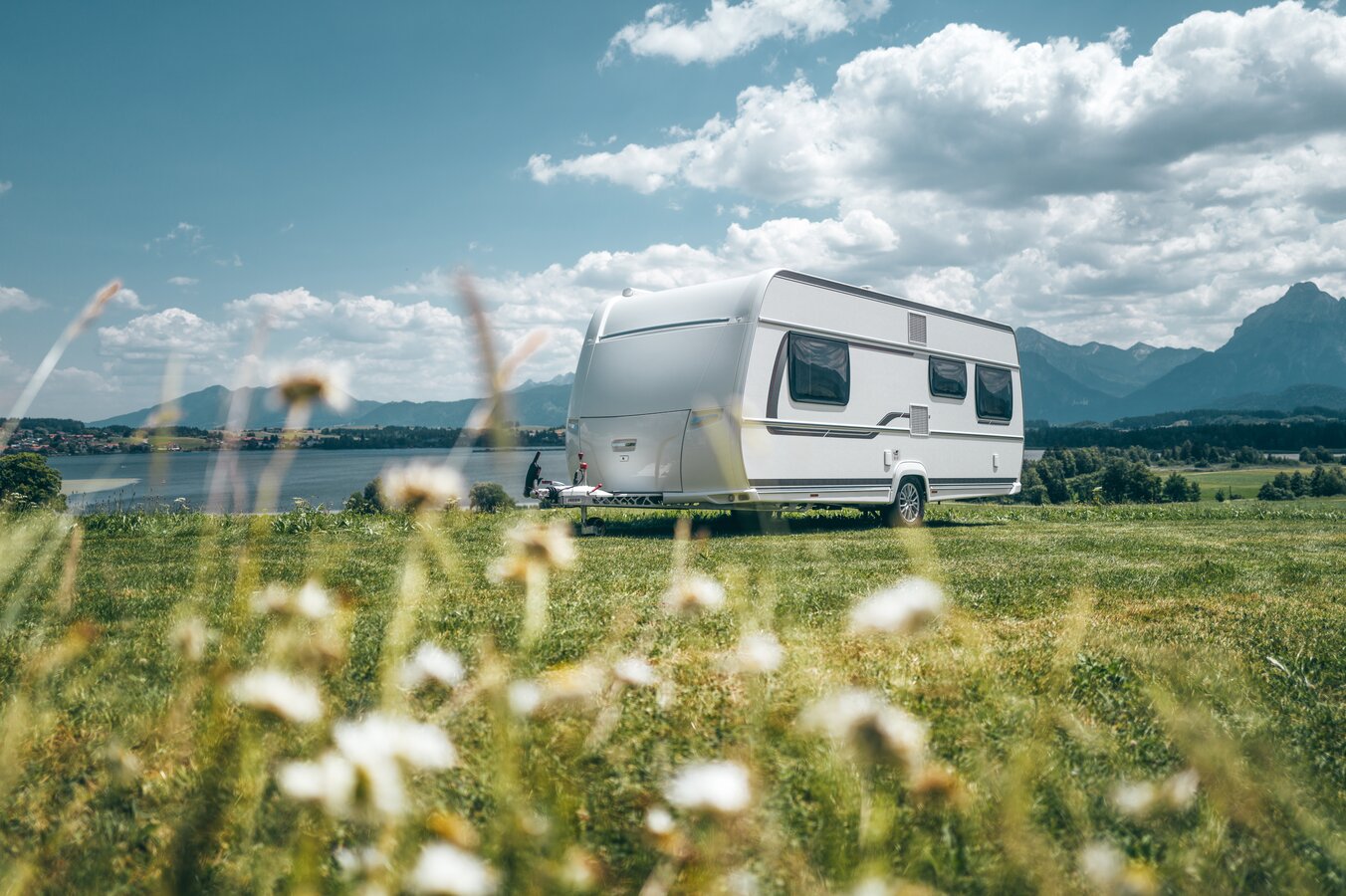
Wohnwagen (Caravan): flexibel und komfortabel am Standplatz
Ein Wohnwagen ist ein Anhänger, der von einem Zugfahrzeug gezogen wird – selbst fährt er nicht.
Advantages
- Flexibility at your holiday destination: You can leave the caravan at the campsite and take your towing vehicle for day trips, shopping or sightseeing without having to move your entire unit.
- More living space for your money: Caravans often provide a lot of space for fixtures and luggage, and are usually cheaper to purchase than comparable motorhomes.
- Lower running costs: With no engine or complex drive technology, maintenance, insurance and tax are generally more affordable.
- Ideal for families or longer stays in one place: If you plan to stay in one place for a longer period or want to remain flexible around the campsite, a caravan is a particularly comfortable and practical option.
Disadvantages
- Dependence on a towing vehicle and restricted driving: Without a suitable towing vehicle, you can’t go anywhere, and manoeuvring or reversing a unit can be challenging for inexperienced drivers. AL-KO VT offers support with manoeuvring systems and driving safety systems.
- Less spontaneous changes of location: If you plan to move frequently or set off spontaneously, it’s more effort than with a motorhome, as you’ll need to reconnect your trailer every time. In our blog, we explain how to make a caravan ready to go quickly and safely.
- Speed and parking restrictions: Units are usually slower and less agile than an ordinary car or a compact motorhome.

Wohnmobil (Reisemobil): maximale Freiheit und Komfort auf Rädern
Ein Wohnmobil kombiniert Fahrzeug und Wohnraum in einem – Motor, Fahrerkabine und Wohnbereich.
Advantages
- Spontaneity and mobility: Whether for a short weekend trip or a longer tour, with a motorhome you’re ready to go at any time and can move flexibly between sites and stages.
- Comfort and equipment: Modern motorhomes are often equipped with a kitchen, sanitary area (toilet, shower), living and sleeping areas – ideal if you’re travelling for a longer period and don’t want to miss out on comfort.
- Self-sufficiency when camping: Many motorhomes are designed to be self-sufficient, with fresh water, waste water and power supply, and with quality conversion even a solar power system or heating.
- Quick to move on: If you’re travelling or frequently changing pitches, a motorhome is practical – no trailer, no decoupling or reattaching required.
Disadvantages
- Higher purchase and running costs: Motorhomes are generally more expensive than caravans, both to buy and to run (insurance, tax, and maintenance).
- Less flexibility on location for day trips: If you want to leave the site, you have to move the whole vehicle. This can be inconvenient, especially on busy campsites or in narrow streets. Thanks to practical carrier systems for motorhomes, you can conveniently bring bicycles or motorbikes on your camping holiday and be mobile on two wheels when you arrive.
- Size and manoeuvrability: Larger motorhomes are less agile, need more space to park, and can be harder to handle on narrow streets or in city centres.
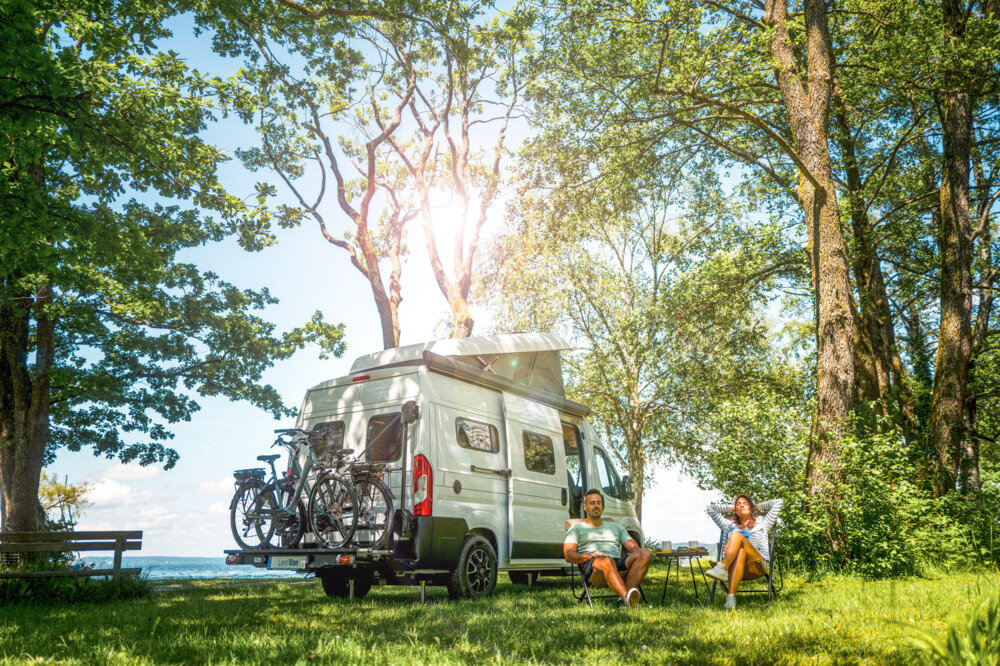
Kastenwagen/Campervan (Transporter als Wohnmobil): kompakt und alltagstauglich
Ein Kastenwagen oder Campervan basiert meist auf einem Kleintransporter oder Van, der zum Campingfahrzeug ausgebaut wurde – mit Schlafgelegenheit, kleiner Küche und oft minimalistischer Ausstattung.
Advantages
- Compact design and everyday usability: A panel van is much easier to use for daily driving than a large motorhome. It’s easier to drive, park and manoeuvre – perfect for urban environments or small pitches.
- Efficiency and economy: Lower consumption, smaller vehicle size and simpler handling – ideal for short trips, spontaneous weekends away or travelling with little luggage.
- Flexibility and minimalism: If you’re happy with the basics – a place to sleep, a small kitchen, maybe a toilet – a panel van offers a very flexible way to travel, especially for couples or solo travellers.
Disadvantages
- Reduced comfort and less space: The compact layout means less living space. Large kitchens, plenty of storage and separate sleeping areas are uncommon.
- Compromises in sanitary facilities and equipment: Many panel vans have no or only a small bathroom, less storage space and a lower standard of home comfort compared to classic motorhomes or caravans.
- Unsuitable for larger groups: Due to the limited space, panel vans are best for one or two people and are much less suitable for families or groups with a lot of luggage.
Caravan vs. Motorhome vs. Panel van: Which vehicle is right for you?
Whether it’s a caravan, motorhome or panel van, all three offer the adventure of camping in very different ways. The decision depends on how you want to travel and what matters most to you:
- Are you planning long stays in one location, a family holiday, or want plenty of space and comfort with flexibility for everyday life? Then a caravan can be ideal.
- Do you love spontaneous road trips, frequent changes of location, and value comfort and independence? Then a classic motorhome is a great choice.
- Do you want to travel compactly, flexibly and minimally – perhaps as a couple or on your own – and value agility and everyday practicality? Then a panel van is the perfect match.
Ultimately, ask yourself: What do you want your camping holiday to look like? What lifestyle, priorities and budget are most important for you? The clearer your priorities, the easier it is to find the right vehicle – and the more relaxed your next adventure will be.
Also consider your budget, running costs, intended use and parking options when making your decision. Every vehicle type has its strengths. There’s no right or wrong – only what suits your preferred holiday style best.
Have you already decided on a vehicle type and are ready for your big camping adventure? Our blog offers tips for your first camping holiday.

Once you have subscribed, you’ll receive exclusive information about products, news, offers and more straight to your inbox.