Revolution on wheels: modern electronics systems in campers
Imagine being able to control your entire home on wheels with smart technology: power supply, lights, heating, on-board batteries – all at the touch of a button or by voice command.
AL-KO Vehicle Technology, with its electronics division, is making this vision an increasing reality.
Many modern recreational vehicles – from compact panel vans to luxury motorhomes – are already equipped with our electronics systems. These introduce a new dimension of comfort and also increase self-sufficiency and safety on the move.

The essentials at a glance
- Electronic networking enhances usability, comfort, safety, energy efficiency and self-sufficiency in recreational vehicles.
- AL-KO VT is a system supplier for electrical and electronic infrastructure in caravanning, including complete custom wiring harnesses.
- AL-KO VT takes care of networking all on-board components as well as energy management (batteries, photovoltaic systems).
In this article, we take you on a journey into the fascinating world of electrical and electronic innovations that make your trip into the great outdoors more convenient and safer – with a glimpse into the future of camping.
The basics: standard electronic systems in recreational vehicles
Most modern recreational vehicles come with a range of electronic equipment as standard from the factory. The range varies depending on the vehicle class and type. A 12V/230V on-board power supply with various switches and sockets now comes as standard in practically every fully equipped camper – whether it's a caravan, motorhome or panel van. In addition, modern vehicles are usually fitted with the following components:
- Entry-level caravans: control panels for lighting and heating as well as wiring harnesses.
- Panel vans: control panels for monitoring and controlling the on-board battery and energy management, including charging controllers for charging management while driving and when connected to mains power, as well as control of lighting and other basic functions.
- Mid-range motorhomes: dedicated charging controllers and increasing use of solar modules, which are often retrofitted.
- Larger, premium motorhomes: touch displays, voice control (e.g. Alexa and Siri), digital status queries and control via app, often integrated into the existing bus system and requiring cloud connectivity.
Pimp your motorhome: retrofits and upgrades
Many recreational vehicle owners retrofit their vehicles to further enhance comfort and independence. The most common upgrades include:
- Solar modules with charge controllers: often in combination with additional or higher quality batteries.
- Inverters (Converter/Inverter): for converting DC to AC power.
- Higher output, digitally controlled chargers: for more efficient charging.
- Satellite and air conditioning systems: to improve comfort.
It is important that these retrofits are compatible and safe. Products should meet current standards and be matched both in terms of hardware and software.

Networking for even greater comfort
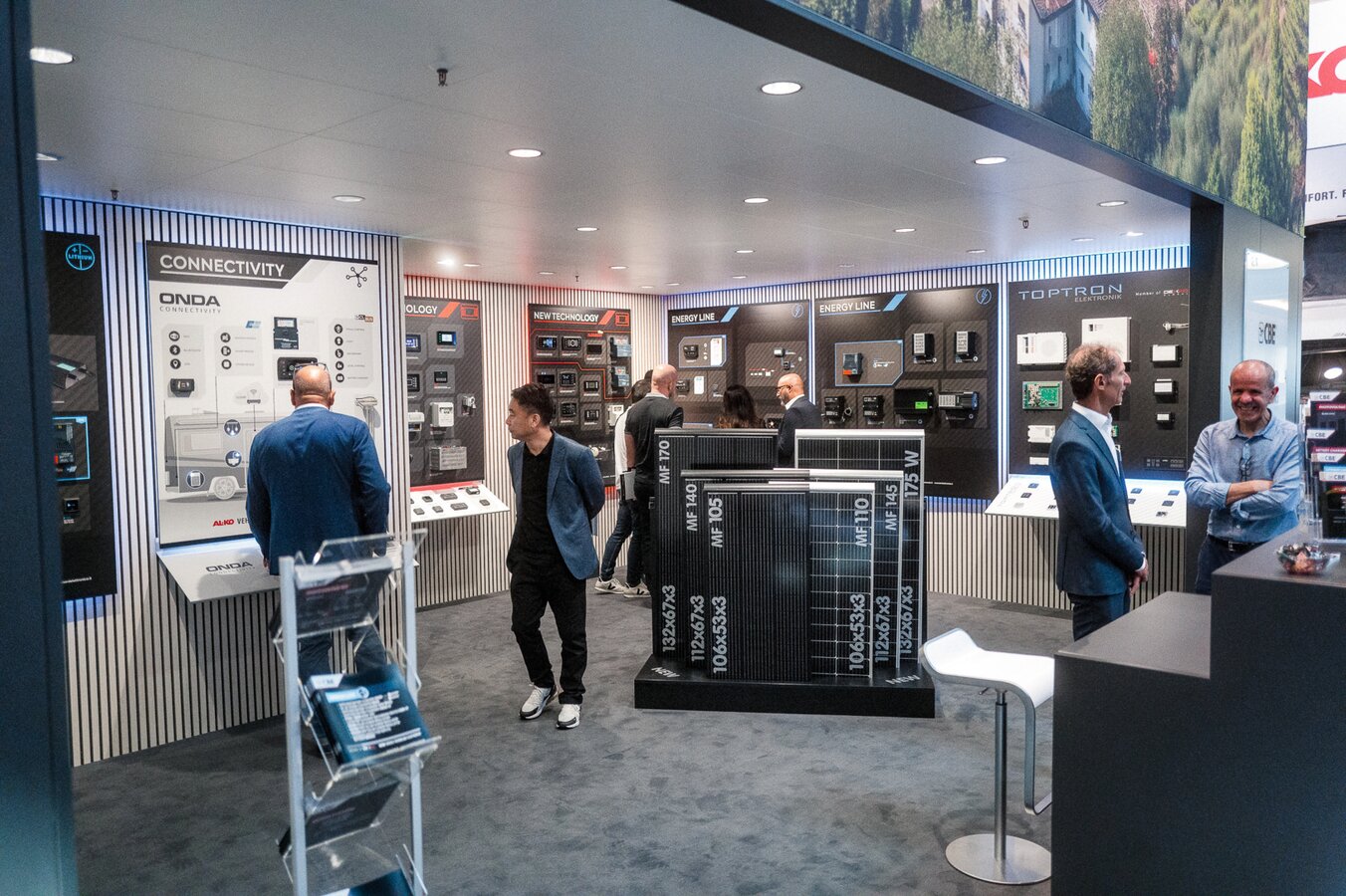
Connectivity is a hot topic nowadays – it has long since become established in houses and flats. In recreational vehicles, the intelligent networking of various devices has, up to now, been a niche topic for "tech enthusiasts". However, this is set to change rapidly, as the "smart camper" not only offers greater convenience, but also increases the safety and functionality of connected components.
With our ONDA App, you can connect all devices that have a CI-Bus interface. This allows you to execute commands, read out data and monitor the performance of equipment: you can keep an eye centrally on lighting, water tank level, heating, interior and exterior temperature, battery charging, vehicle alignment and much more at any time.
The app is also open to interfaces from other providers and can therefore be used outside the AL-KO VT universe.
Self-sufficient recreational vehicles: electronics as a key component
Self-sufficient recreational vehicles can go several days without connection to a fixed power grid. This is made possible by a comprehensive electronics package that ensures the power supply for heating, cooking, lighting, fridge and hot water. Even gas-powered devices are generally ignited and monitored electronically.
Hand in hand: energy sources and their interaction
Modern recreational vehicles use a variety of energy sources:
- Batteries: for basic power supply and short periods off-grid
- Solar modules: for longer off-grid stays and sustainable power generation
- Generators: as emergency backup – popular, for example, in Australia and New Zealand
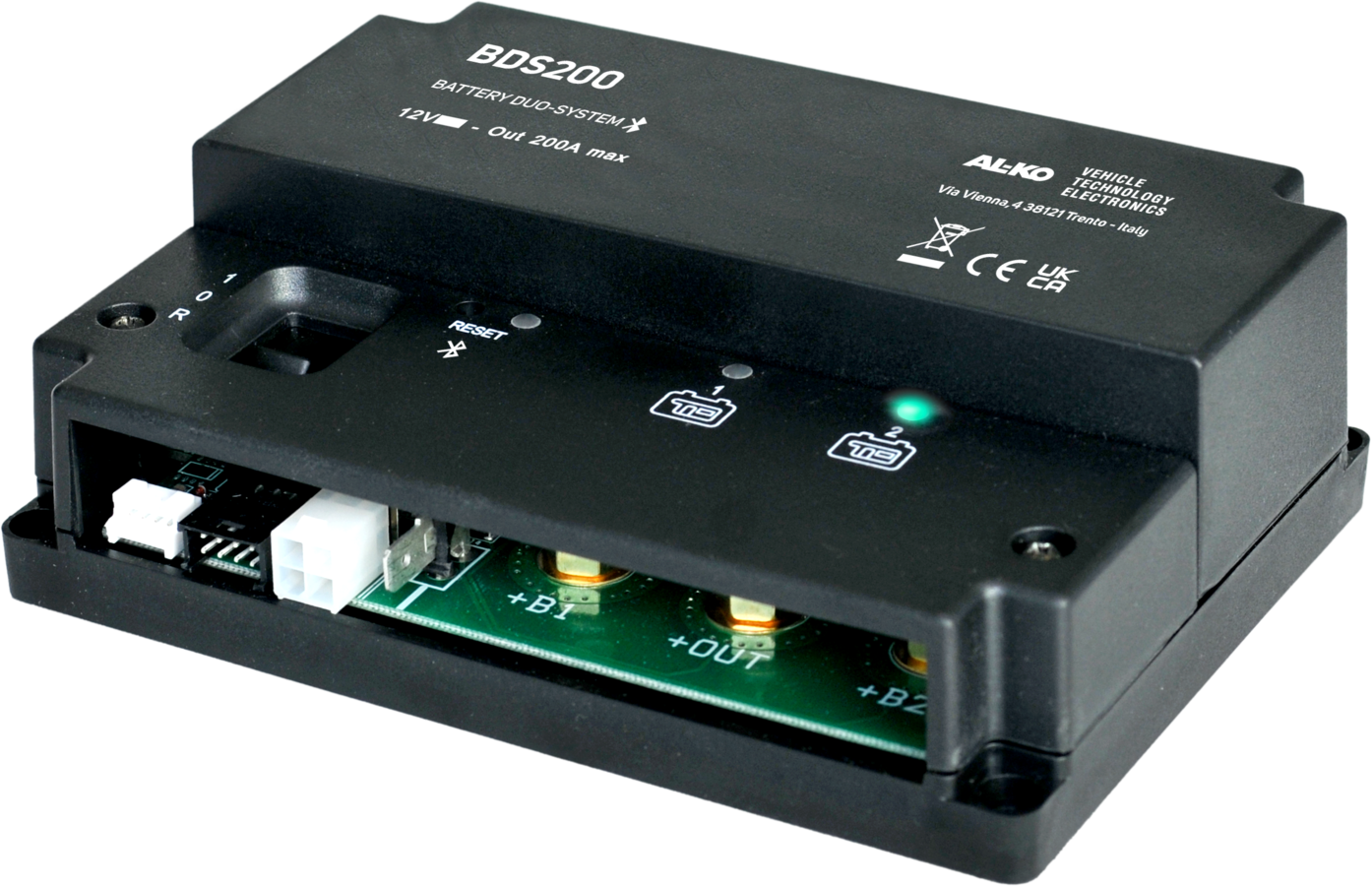
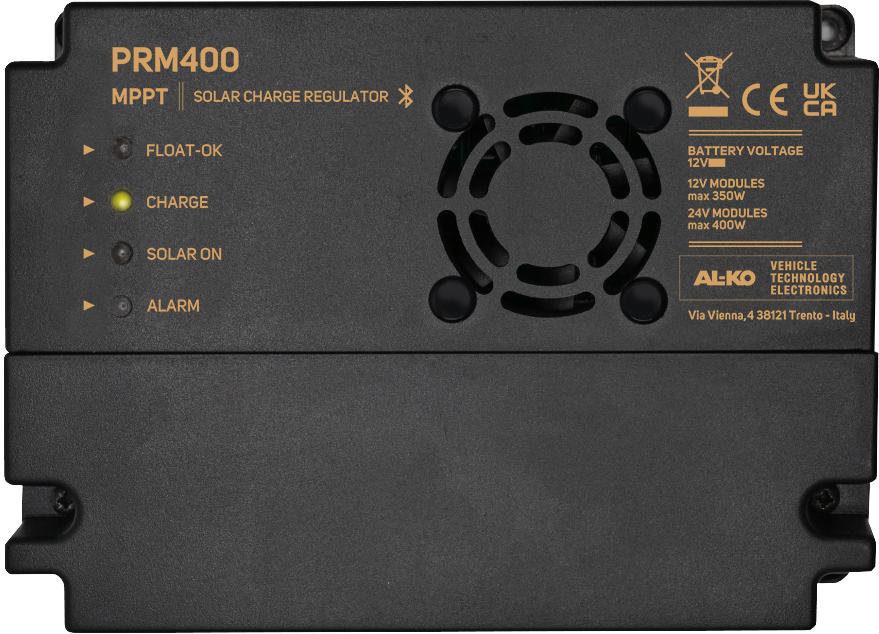
These energy sources work together to ensure efficient and sustainable power supply. Intelligent charge controllers and battery management systems play a crucial role by reading charging currents, regulating power consumption and distributing energy optimally.
Safety and monitoring systems
Various helpers are used on board for safety, independently monitoring all components and responding to faults where necessary:
- Fuse boxes: for identifying and disconnecting faulty components.
- Lighting controls: to detect irregularities and trigger automatic switch-offs.
- Camping 4.0: Networking and software integration of distribution boxes: as decentralised controllers for rapidly responding to faults.
These systems are often integrated into a central controller, providing comprehensive monitoring and safety.

Camping 4.0: Networking and software integration
Electronic networking in recreational vehicles is often accomplished via digital bus systems. Here, the software plays a central role, enabling the control and monitoring of systems via mobile devices. Modern apps offer interfaces to external products and vehicles and guarantee the safety and functionality of the entire electronics system.
Future trends and innovations
Electronics in recreational vehicles are becoming ever more intelligent and interconnected. Future trends include:
- Advanced connectivity: cloud integration for added services and features
- Comprehensive safety and comfort functions: such as assistance systems and infotainment services.
- Self-management of the systems: automatic status reports regarding maintenance and product availability
- Integration of artificial intelligence (AI) and communication between devices via networks (the "Internet of Things" or IoT): for even more efficient, safer operation and monitoring
The continuous evolution of electronics will revolutionise the camping experience and set new standards for comfort, safety and sustainability.
Start your holiday and the future with electronic assistants
The electronics in modern recreational vehicles have developed significantly in recent years, offering countless benefits. From off-grid power supply to intelligent networking and control, the possibilities are almost limitless. For campers, this means more comfort, safety and independence whilst on the road. The future promises even more innovations and technological advances that will continue to enhance the camping experience.
