Motorhome care: cleaning the water tank
A clean water tank is essential for safe and hygienic water supply when travelling. To enjoy clean drinking water at all times, both the tank and pipes must be cleaned regularly. Here, we show you how to clean the water tank in your motorhome and what you need to bear in mind. We also present an alternative to chemical cleaning agents from specialist retailers.

Why clean the water tank in your motorhome regularly?
Limescale and what is known as biofilm build up inside water tanks over time. Biofilm forms around microorganisms and provides an ideal environment for bacteria. Regularly cleaning the water tank in your motorhome is therefore essential. However, it is not possible to completely prevent biofilm formation in aqueous environments. Biofilm develops from particles in drinking water, plasticisers in plastic elements and from limescale deposits.
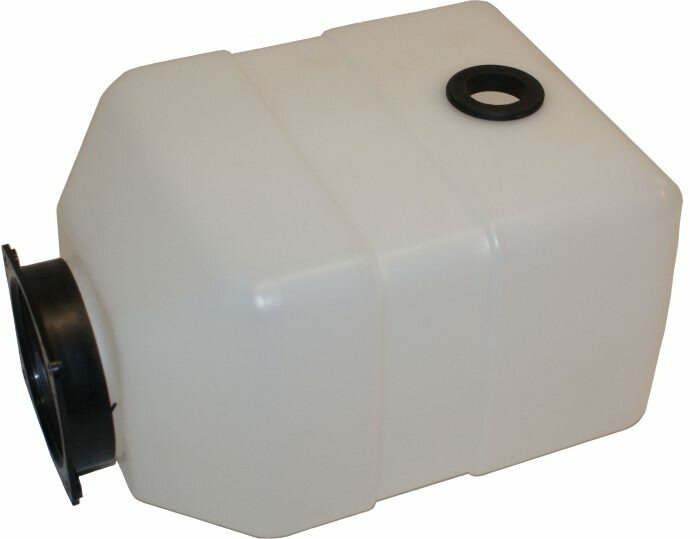
How often should the water tank be cleaned?
As a general rule, it is recommended that you clean the water tank in motorhomes at least once a year. It is even better to clean the tank before and after each season. At the latest, if the water begins to smell unpleasant or tastes different, cleaning is unavoidable.
Tip: Are you new to camping? To make sure you don’t forget anything before your trip, it is best to create a checklist. Remember to include the cleaning of the water tank.
Are there alternatives to chemical cleaners?
There is a wide range of professional cleaning agents available from specialist retailers for cleaning motorhome water tanks. These are mostly based on substances such as chlorine dioxide, active oxygen or fruit acids. You should always follow the manufacturer’s instructions when using these products to avoid contaminating your drinking water later on.
Caution: Wear gloves when cleaning the water tank to prevent direct contact of the cleaner with your skin. Never mix different cleaning agents together. Chemical reactions can lead to the formation of harmful gases.
Some household remedies also need to be used with care. Vinegar essence removes limescale and has an antibacterial effect, but can damage seals. Denture cleaner is antibacterial, but may leave behind residues that can damage the pump. If you are looking for an alternative to clean the water tank in your motorhome, we recommend using citric acid.
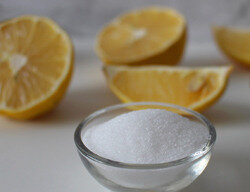
Cleaning the water tank with citric acid
Step-by-step instructions
Step 1: Empty the water tank
First, empty all the water from the tank and boiler. Open the inspection hatch and all water taps while you do so.
Step 2: Manual cleaning
If you want to clean the water tank in your motorhome, you must first manually break down the previously mentioned biofilm inside. This is important, as the biofilm protects bacteria against external influences, such as changes in temperature or pH value, and the effect of chemicals. If the biofilm is fully intact, cleaning agents may not be effective.
For manual cleaning, loosen limescale and other deposits with a damp sponge first, then scrub the tank with a brush. Remove all seals and closures and clean these with a sponge as well. You should also clean the pipework as far as possible. Thin pipe brushes, such as those used for cleaning aquariums, are ideal for this. Afterwards, close the tank and boiler again.
Step 3: Preparing the citric acid
Dissolve the citric acid powder in warm water. For a 100-litre water tank, four litres of water and five to ten heaped tablespoons of citric acid are sufficient. Adjust the quantities accordingly for your water tank.
Step 4: Cleaning the water tank and pipes
To clean the water tank and pipes in your motorhome, pour the dissolved citric acid into the tank through the inspection or filling opening. Important: the citric acid powder must be completely dissolved. Then fill the tank and boiler with fresh water and open the water taps for about half a minute to flush the entire system through. Close the taps again and allow the citric acid to work for at least 30 minutes. After the exposure time, open the taps again and let the water run until the tank is completely empty.
Tip: Even though citric acid is generally harmless, it is recommended to empty your waste water tank at a disposal station.
Step 5: Rinsing with fresh water
Finally, fill the water tank again with fresh water and let it run through until the tank is empty. Then leave the inspection and drain openings as well as the taps open for some time to allow the water system to dry out.
References
- https://www.whatabus.de/whatabus-fruehjahrsputz-i-wassertank-und-leitungen-reinigen-im-wohnmobil/
- https://www.ducatoschrauber.de/wassertankreinigung-im-wohnmobil/
- https://www.promobil.de/tipp/tankreinigung-saubere-sache/
- https://www.caravaning.de/tipp/wasser-spezial-tankreinigung-fuer-sauberes-keimfreies-wasser/
- https://www.pincamp.de/magazin/ratgeber/wohnmobil/wassertank-im-wohnmobil-darauf-musst-du-achten?cat=magazine&gro=article-tile&lab=prn:page:magazin-ratgeber-wohnmobil
