Welcome, newcomers! – Tips for your first camping holiday
The camping trend has been going strong for years and continues to win over new enthusiasts – couples, families with children, and solo travellers alike. Good planning is the key to making your first camping adventure truly enjoyable. It’s also important to choose the right camper to fit your personal needs. You’ll find tips for a successful first camping holiday in this article!

The essentials at a glance
- Well-thought-out planning and preparation are the first step to a successful camping adventure.
- Minimalism is key when camping – this also applies to your luggage.
- Make a good impression on the campsite and avoid typical beginner mistakes with our tips.
Tip no. 1: Plan your destination and route carefully
Are you the adventurous type, or do you prefer to relax for two weeks in one place? There are many different ways to enjoy a caravan holiday. Your decision will largely depend on factors such as how long you are away for, when you’re going and what your destination is – and this will also influence your choice of recreational vehicle.
Take some time to think carefully about how you (and your travel companions) want to spend your holiday. Touring from place to place, where you sleep somewhere new every night, takes much more organisation than two weeks on a pre-booked caravan site.
Tip no. 2: Choose the right recreational vehicle
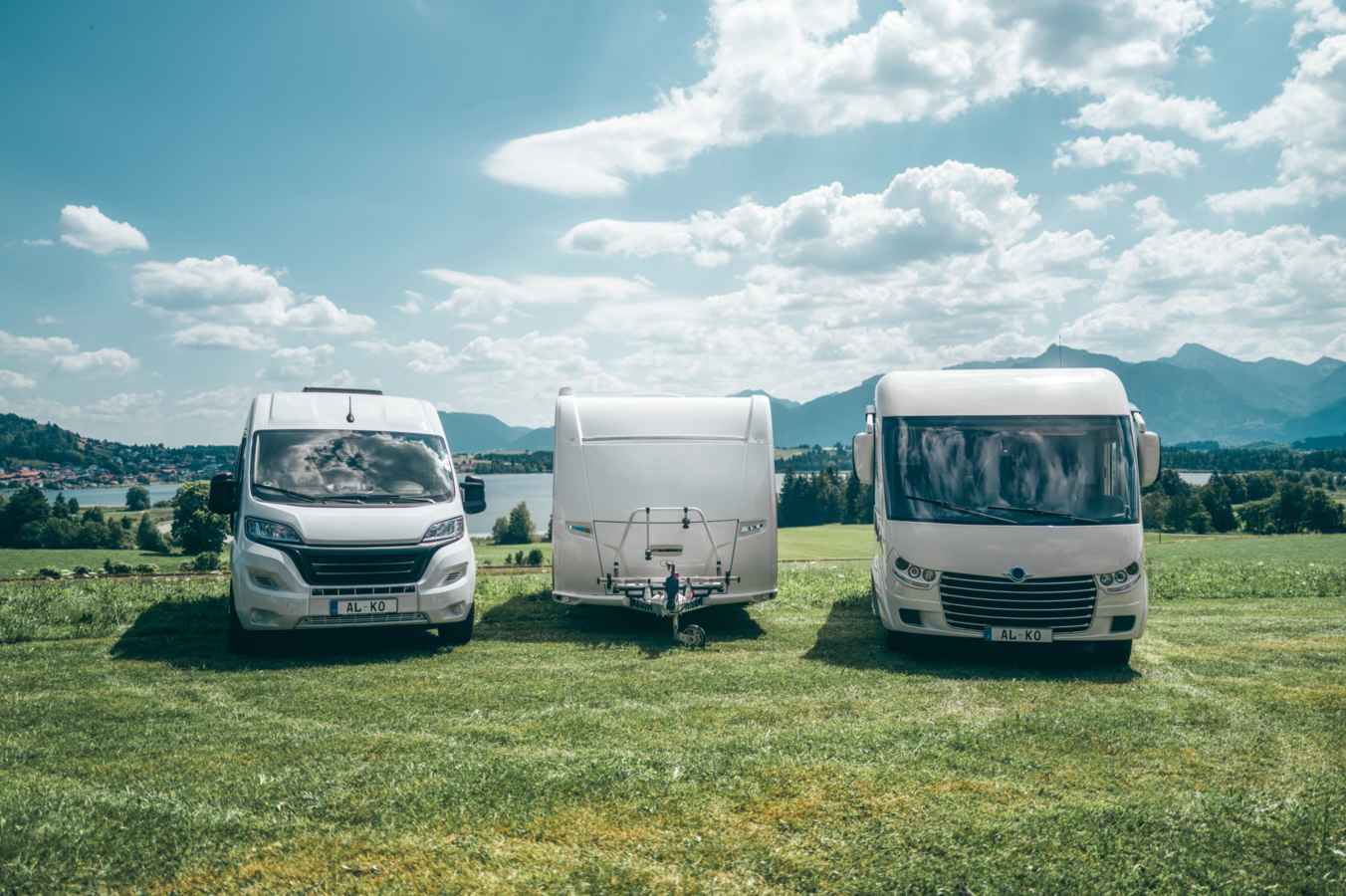
Van, panel van, motorhome, caravan: Every type of recreational vehicle has its own character and is more or less suitable for different numbers of people and travel styles. In the following overview, you can take a look at a comparison of caravan, motorhome, panel van and campervan in detail and consider which one best suits your planned trip.
For your first camping adventure, it’s a good idea to start with a rental vehicle, whether from a dealer or through friends. That way, you can find out if you actually enjoy camping holidays – and if so, you might want to do it again! It also gives you the option of renting a caravan one year and a motorhome the next, so you can become familiar with the different types of vehicle.
Take your time! Don’t head off on your holiday straight from the dealer's forecourt; plan enough time for packing and trial drives. Don’t underestimate the vehicle handover, either: Take notes, maybe even short videos – you’ll get so much information about water supply and disposal, electrical connections, gas supply and the like, and it’s hard to remember every detail. Check in advance that you have the right driving licence class for your chosen vehicle to avoid nasty surprises during the handover. For more on what to look out for when hiring a vehicle, see our article on beginner mistakes when hiring a camper.
Tip no. 3: Be frugal with your luggage
When it comes to camping holidays: less is more! Both space and permissible weight set natural limits – and your fuel consumption will be lower if you carry less weight.
Depending on whether you opt for a rental vehicle or a vehicle borrowed from a fellow camper, the basic equipment will differ considerably. Rental vehicles from a dealer generally come with technical equipment like gas bottles, wheel chocks and so on, but kitchen equipment such as crockery, pots and cutlery needs to be packed by you, as do, of course, your personal items like towels, bedding, clothing, games and books. Some dealers offer the option to rent a set of camping furniture as well.
You’ll find an overview of what can (but doesn’t have to) go in your motorhome or caravan in this checklist: Basic equipment for caravan and motorhome – this is mainly aimed at those with their own leisure vehicle, but it provides a good overall summary of possible equipment.
An extra tip, which may be a bit much for newcomers but is still useful: For advice on how to load your vehicle correctly, see our article Tips for correct loading of motorhome and caravan.
Tip no. 4: Remember theft protection
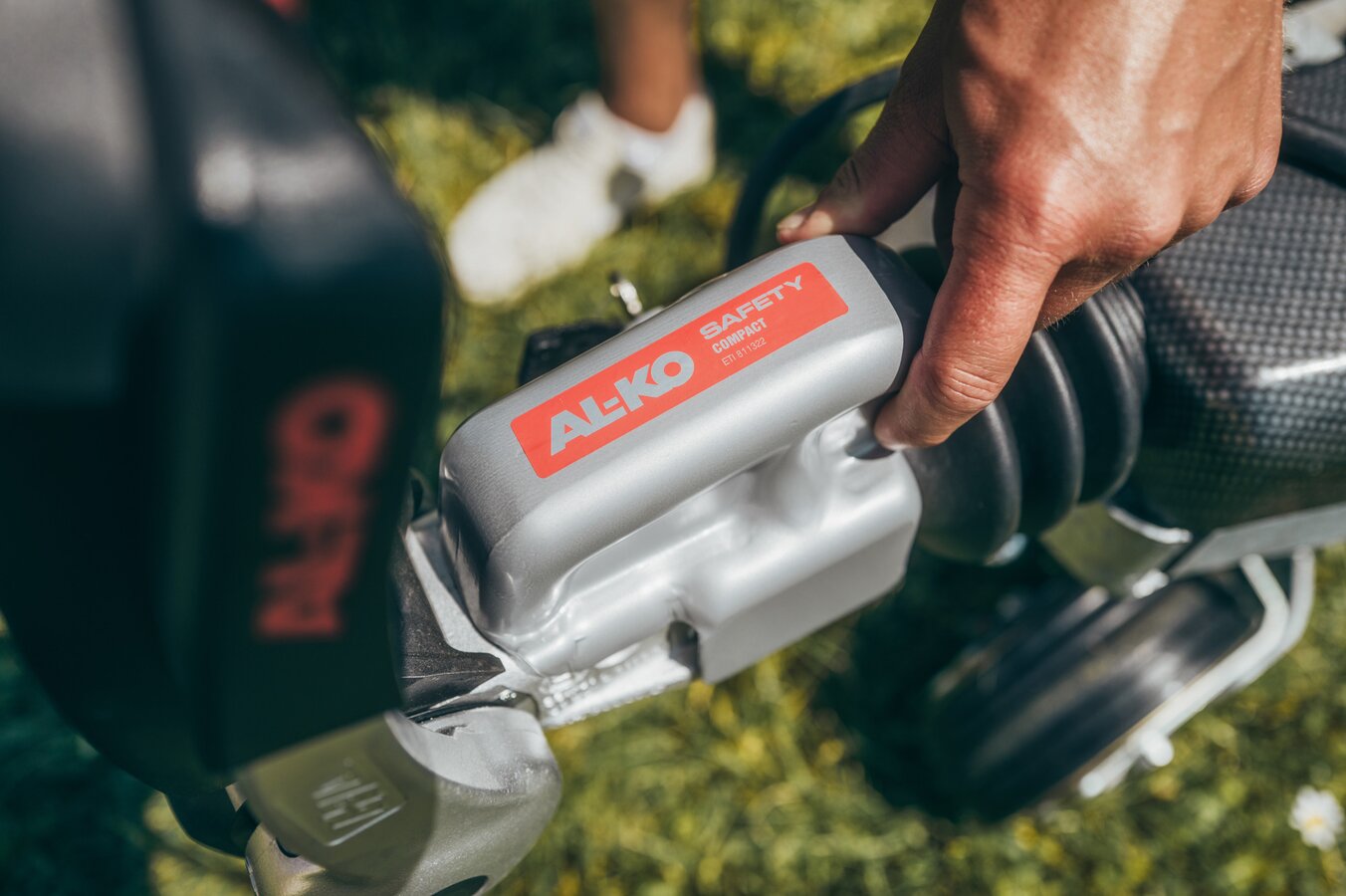
Usually, your rental company will provide you with tips and possibly equipment for theft protection. Before you set off, also consider which valuables can be left at home in a safe place, and, just in case, make copies of your vehicle documents and ID – it certainly won’t do any harm.
Find practical tips and products in our blog article on theft protection for motorhome and caravan.
Finally on holiday – let the camping adventure begin!
It’s time to set off – your holiday begins. By now you’ll know that camping also means work, and although it can be a five-star holiday in its own way, it certainly doesn’t come with an all-inclusive package. Even while travelling, setting up and taking down, and during your stay at the site, there is always something to do. And just like in hotels or holiday apartments, there are rules on the pitches and campsites – a little microcosm with its own unique charm – that ensure a pleasant atmosphere for everyone.
We’ve put together our top 3 typical beginner mistakes for each stage: while on the move, on the campsite, and when setting up and packing away. All of these are easy to avoid with a bit of consideration.
On the road + Setting up and packing away
- Don’t travel with full water tanks! Unless absolutely necessary, travel with an empty waste water tank and only a minimally filled fresh water tank. Not only does this save weight (and therefore fuel), it's also nicer to fill up with fresh water when you arrive at your destination.
- Always empty the toilet and waste water tanks in good time! Always keep an eye on the fill level indicator for your toilet – better to empty too soon rather than too late. If you’re leaving a campsite for a two-day trip to the next site, we recommend emptying the toilet beforehand, even if it’s not full yet. The same goes for the waste water tank.
- Checks before departure! There are always a number of things that need doing before setting off. These soon become routine, but at the beginning, use a checklist to remind yourself consciously of the following:
- Are all doors, windows and service flaps closed?
- Is the awning fully retracted and locked?
- Have you closed all drain valves?
- Is the power cable disconnected and stowed away?
- Are any supports retracted?
- Have you packed all your things? Steps, chairs, flip flops, bike locks and similar items are easily forgotten.
- Are you on wheel chocks? If so, roll off them first and don’t forget to pack them.
On the campsite
- Don’t attract creepy-crawlies! Leaving out food will attract ants, wasps and the like much faster than you think. Don’t leave rubbish, food scraps or sweets uncovered outside – or even in your motorhome, as little creatures can find any gap.
- Respect quiet times and noise levels! There’s nowhere quite as quiet and peaceful as a campsite in the early morning. Campers value mutual consideration, which includes being thoughtful and quiet especially in the evenings and mornings. That goes for inside the motorhome as well, since the walls are not as thick as those of a house.
- Don’t walk across your neighbour’s pitch! You may sometimes hear “Ah, new campers!” if you cut across someone else’s pitch. This square plot is each camper’s own little territory – never cross it uninvited or just because it is a shortcut. Some campers might not mind, but it is one of the unwritten rules in the camping community to avoid doing so.
If you already follow these simple tips, you’ll be warmly welcomed as a camping newcomer and on your way to becoming a seasoned camper. We wish you a wonderful first camping holiday!

Once you've registered, you’ll receive exclusive information about products, news, offers and more straight to your email inbox.