Driving a recreational vehicle: How to avoid emergencies
Holidaying in a motorhome or caravan means freedom and adventure, but is also a special challenge for even experienced drivers – especially after a long season break. No matter if you’re a new camper or have been on the road for years, an emergency situation can arise at any time. In this article, we offer practical tips to help you avoid dangerous driving scenarios.

Key points at a glance
- You can reduce the risk of emergency situations by practising your driving technique and making sure your vehicle is correctly loaded.
- If you do encounter a danger while driving, remember the 'three Fs' for correct braking: fast, firm and for a sustained period.
- Safety systems can help when driving a camper, and are usually easy to retrofit.
Test drives on familiar roads
Practise driving your recreational vehicle on familiar, quieter roads at first. This is sensible when you buy a new camper or after a seasonal break. Practice always leads to more safety.
If you want to gain even more experience and be best prepared for potential hazards, a driver safety training – such as those offered by the ADAC – is well worth considering. Training like this helps you get to know your vehicle and its built-in safety components, and allows you to rehearse the right actions in hazardous driving situations.

Correctly loading your recreational vehicle
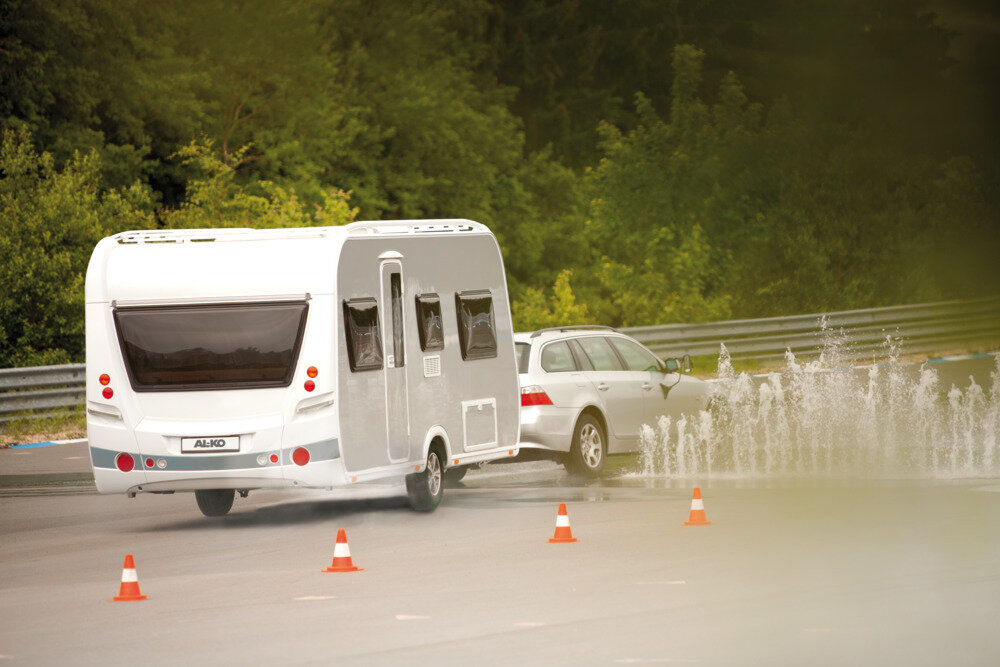
Whether you have a panel van, motorhome or caravan: correct loading is one of the most important factors for a safe journey. In an emergency stop or even a collision, small or light objects can become real hazards, and poor weight distribution can also lead to loss of vehicle control.
Driving with anticipation
An anticipatory driving style is always the best way to prevent accidents. This includes braking in good time and avoiding unnecessary overtaking. Precise steering input also helps minimise instability.
Emergency manoeuvres and emergency stops – done right
No matter how careful you are in traffic, an emergency stop or sudden manoeuvre can become necessary at any time – and it isn't always your fault. For braking, remember the 'three Fs': fast, firm and for a sustained period! The quicker and more firmly you apply the brakes, the sooner your vehicle will come to a complete stop. Proper hand position – both hands at 'quarter to three' on the steering wheel – also improves stability and helps keep you relaxed at the wheel.
The importance of well-maintained and adjusted brakes cannot be overstated. AL-KO VT service manager Florian Vorreiter and Dennis from Gogo4Camper demonstrate the correct way to brake with a caravan and trailer in the videos below. In part one, they explain the function and technology of the overrun brake, while in part two they discuss situations and errors you should avoid.
Making use of additional safety systems
No matter how much your driving confidence increases with every kilometre, innovative technologies can greatly assist you when driving your recreational vehicle.
AKS stabiliser coupling from AL-KO VT
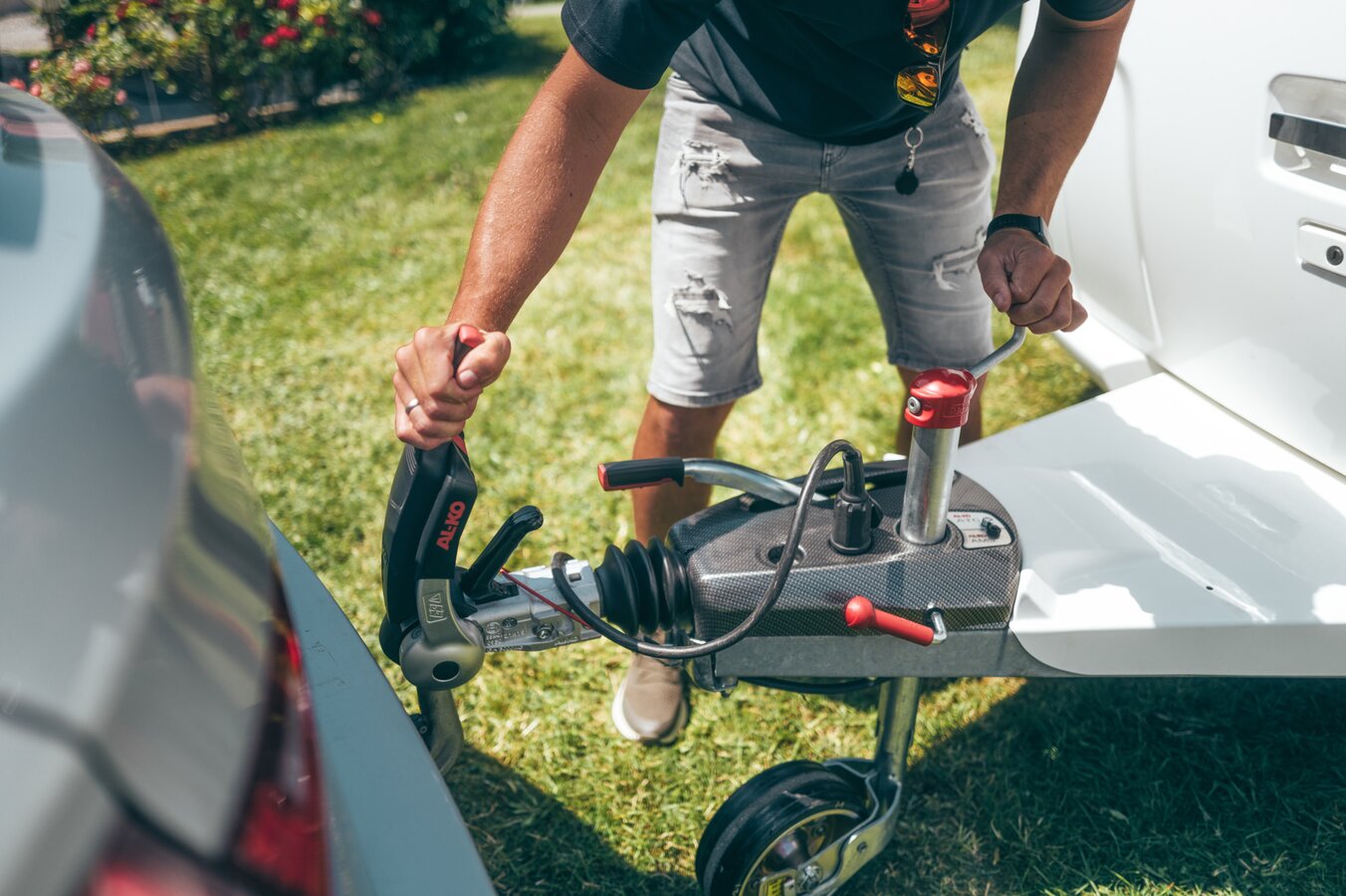
The AKS stabiliser coupling from AL-KO VT significantly reduces swaying and pitching right from the outset, offering safe, relaxed journeys with trailers up to three tonnes gross weight. It especially helps in situations such as uneven surfaces, side winds or when exiting a lorry's slipstream, by delaying or damping out oscillation in the vehicle combination. The stabiliser coupling is installed instead of the coupling head on the drawbar of the caravan.
ATC anti-sway system
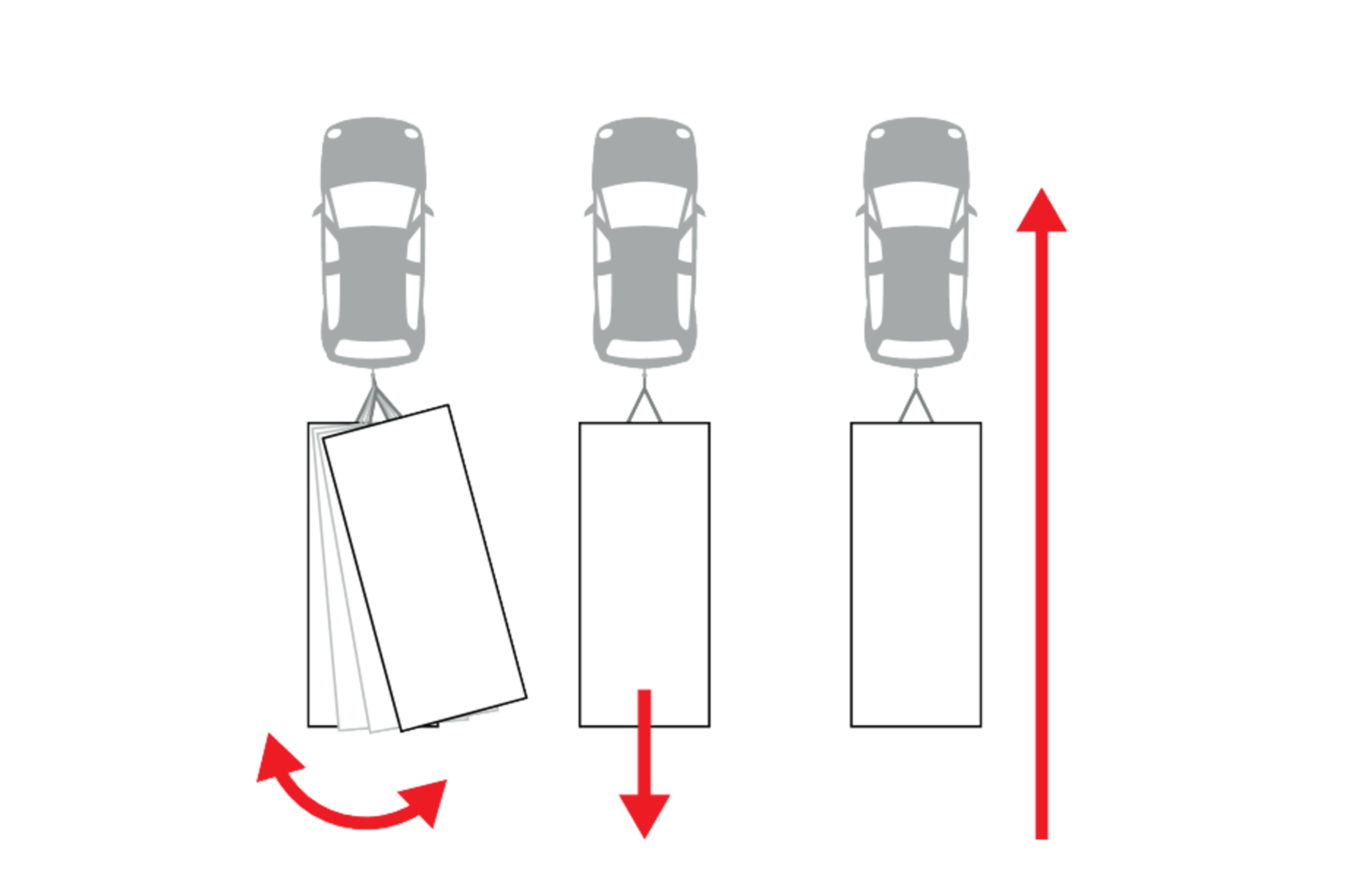
The ATC anti-sway system also provides extra driving stability: caravans have a large surface area for wind and are more responsive to factors like emergency manoeuvres, overtaking or strong gusts of wind than passenger cars. The result is a risk of instability. The ATC system detects and corrects swaying before it becomes a problem for you. The system is installed on the rear axle. Built-in sensors detect when trailer sway becomes dangerous and, via Bowden cables, apply the trailer brakes. This gentle braking straightens and stabilises the vehicle combination, immediately reducing lateral acceleration and calming the situation.
Self-adjusting drum brake AAA
The self-adjusting drum brake AAA (AL-KO Automatic Adjustment) for caravans activates whenever wear increases the play between brake shoe and drum. If a forceful service brake application follows, the play is automatically reduced again. Of course, correct brake setup and regular servicing by a professional workshop are essential for this system to work properly.
Support systems are highly recommended when driving a recreational vehicle, as they can reduce or even eliminate potential driving errors in extreme situations – and they can often be retrofitted to older vehicles with ease. We wish you a safe and relaxed journey on your next trip with your camper!

Once you have signed up, you'll receive exclusive information on products, news, offers and more straight to your inbox.