Caravan, motorhome or panel van: Which vehicle suits your camping holiday?
A camping holiday means freedom, adventure and flexibility – as long as your vehicle meets your needs. Whether you hit the road with a classic caravan, a fully equipped motorhome or a compact panel van depends on many factors: trip duration, comfort requirements, local flexibility, budget and your everyday life. In this post we look at the main pros and cons of the three vehicle types – caravan, motorhome and panel van (campervan/van converted as a motorhome) – and give you a guide for making your choice.

The essentials at a glance
- Caravan, motorhome and panel van in direct comparison
- Differences, pros and cons summarised
- Which vehicle type suits you? We help you decide.
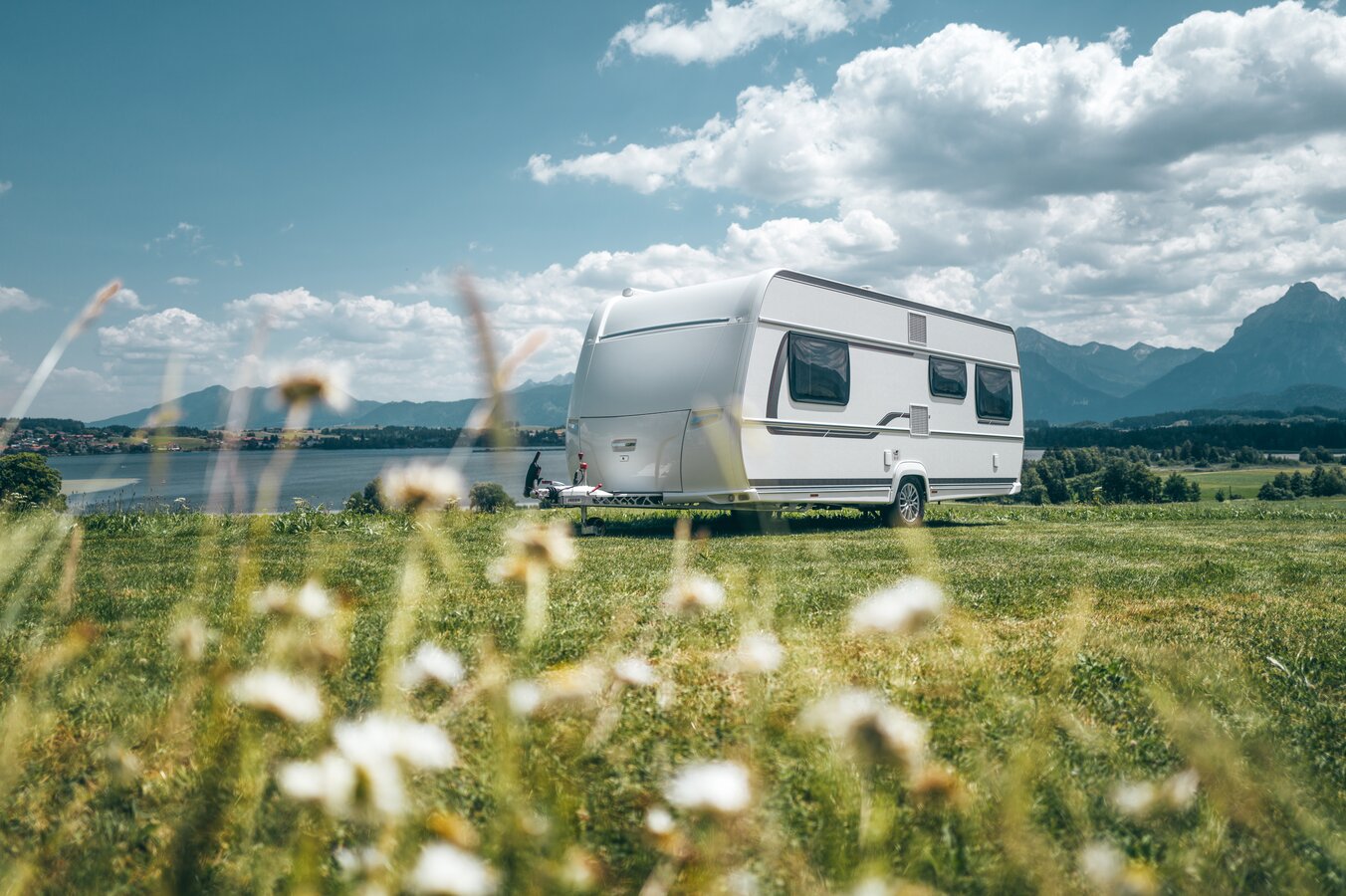
Wohnwagen (Caravan): flexibel und komfortabel am Standplatz
Ein Wohnwagen ist ein Anhänger, der von einem Zugfahrzeug gezogen wird – selbst fährt er nicht.
Advantages
- Flexibility at your holiday destination: You can park the caravan and use your tow vehicle for outings, shopping or sightseeing flexibly without having to move the entire combination.
- More living space for less investment: Caravans often provide plenty of room for furnishings and luggage, and are generally more affordable than comparable motorhomes.
- Lower running costs: As there is no engine or complex drive technology, maintenance, insurance and taxes tend to be cheaper.
- Ideal for families or longer stays in one place: If you plan to stay in one place for a longer period or want to remain mobile around the campsite, the caravan is especially convenient and practical.
Disadvantages
- Dependence on a tow vehicle and driving restrictions: Nothing works without a suitable towing vehicle – especially manoeuvring or reversing can be challenging for less experienced drivers. AL-KO VT provides support with manoeuvring systems and driving safety systems.
- Fewer spontaneous changes of location: If you want to change sites frequently or set off spontaneously, there is more effort involved than with a motorhome, because you always have to reattach the trailer. Our blog post explains how to make a caravan ready for departure quickly and safely.
- Speed and parking restrictions: Combinations are often slower and less manoeuvrable on the road than a normal car or compact motorhome.

Wohnmobil (Reisemobil): maximale Freiheit und Komfort auf Rädern
Ein Wohnmobil kombiniert Fahrzeug und Wohnraum in einem – Motor, Fahrerkabine und Wohnbereich.
Advantages
- Spontaneity and mobility: Whether for short weekend trips or longer tours, with a motorhome you are always ready to hit the road and can flexibly switch between pitches or destinations.
- Comfort and equipment: Modern motorhomes often feature a kitchen, sanitary area (toilet, shower), living and sleeping areas – ideal if you want to travel for longer periods and not compromise on comfort.
- Off-grid camping: Many motorhomes are designed to be self-sufficient, with fresh water and waste water systems, electricity supply, and in well-equipped versions even solar power or heating.
- Quick to move on: If you are travelling or frequently change your pitch, a motorhome is practical – no trailer, no reconnecting or hitching up.
Disadvantages
- Higher purchase price and running costs: Motorhomes are generally more expensive than caravans, both in terms of purchase price and insurance, tax and maintenance.
- Less flexibility on site for excursions: If you want to leave the campsite, you have to move the whole vehicle. This can be inconvenient, especially in narrow streets or on busy campsites. With practical carrier systems for motorhomes, you can take bikes and motorbikes with you on your camping holiday and stay mobile locally on two wheels.
- Size and manoeuvrability: Especially larger motorhomes are less manoeuvrable, require more space to park and can be challenging to handle on narrow roads or in cities.
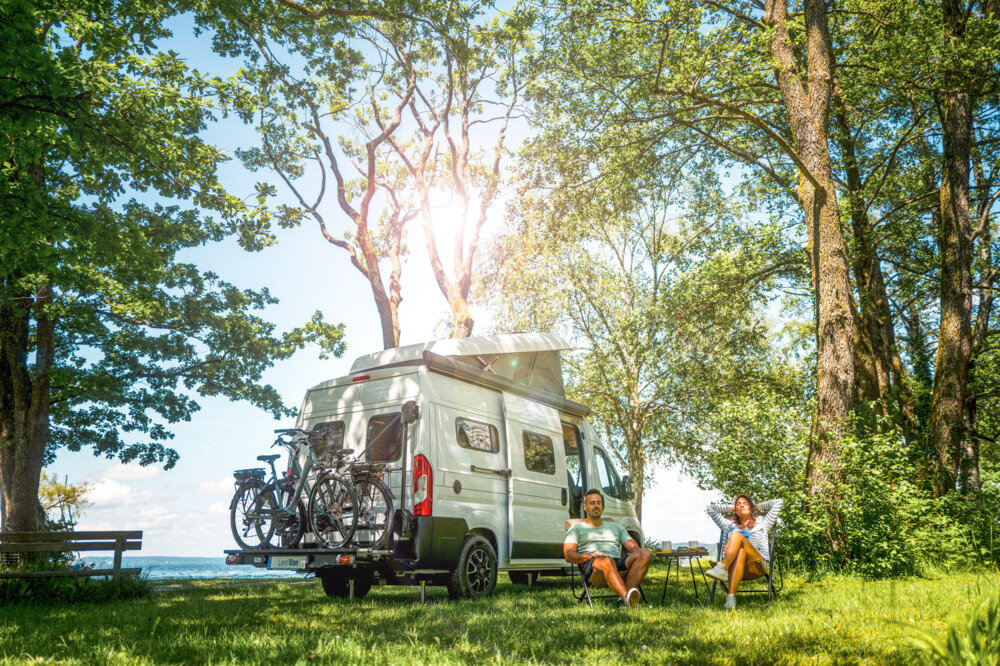
Kastenwagen/Campervan (Transporter als Wohnmobil): kompakt und alltagstauglich
Ein Kastenwagen oder Campervan basiert meist auf einem Kleintransporter oder Van, der zum Campingfahrzeug ausgebaut wurde – mit Schlafgelegenheit, kleiner Küche und oft minimalistischer Ausstattung.
Advantages
- Compact design and suitability for everyday use: A panel van can be used in everyday life more easily than a large motorhome. It is easier to drive, park and manoeuvre. Perfect for urban environments or small pitches.
- Economical and efficient: Lower consumption, smaller vehicle dimensions and easier handling – ideal for shorter trips, spontaneous weekends or travelling with little luggage.
- Flexibility and minimalism: If you can make do with just the essentials – a place to sleep, a small kitchen, maybe a toilet – a panel van offers a very flexible way to travel, ideal for couples or solo travellers.
Disadvantages
- Lower comfort and less space: Due to the compact design, living space is limited. Large kitchens, lots of storage or separate sleeping areas are rare.
- Lower comfort in sanitary facilities and equipment: Many panel vans have no or only a very small bathroom, less storage and generally less cosiness compared to classic motorhomes or caravans.
- Unsuitable for larger groups: Due to limited space, panel vans are optimal for one or two people, but much less suited to families or groups with more luggage.
Caravan vs. motorhome vs. panel van: Which vehicle is right for you?
Whether caravan, motorhome or panel van – all three types let you experience the adventure of camping in very different ways. The decision really depends on how you want to travel and what matters to you:
- Are you planning long stays in one location, a family holiday or comfort with plenty of space and flexibility for everyday use? Then a caravan could be ideal.
- Do you love spontaneous road trips, frequent changes of location and prefer comfort and independence without sacrificing features? Then a classic motorhome is an excellent choice.
- Do you want to travel compact, flexible and minimalist – maybe as a couple or solo – and value manoeuvrability and everyday suitability? Then a panel van (campervan) will suit you best.
Ultimately, you should ask yourself: What do you want your camping holiday to be like? Which lifestyle, needs and budget are most important to you? The clearer your priorities, the easier it is to choose the right vehicle – and the more relaxed your next adventure will be.
When making your decision, also consider budget, running costs, intended use and options for parking or storage. Each vehicle type has its strengths. There is no right or wrong, only what's best for your holiday style.
Already have your preferred vehicle type and ready for your big camping adventure? Our blog post has tips for your first camping holiday.

Once you subscribe, you will receive exclusive information about products, news, offers and more straight to your email inbox.